All Episodes

300 episodes

Bitcoin miners are betting on AI over crypto

9 min

If you want to make Bitcoin, you need powerful computers and a lot of energy. Well, it turns out the same infrastructure needed for Bitcoin mining is pretty valuable in the era of AI. Today on the show, why some miners are starting to throw in the towel on crypto in favor of supporting AI infrastructure. Related episodes:  Whose financing Meta’s massive AI Data Center? (https://www.npr.org/2025/11/25/nx-s1-5619276/whos-financing-metas-massive-ai-data-center) This indicator hasn’t flashed this red since the dot-com bubble (https://www.npr.org/2025/11/06/nx-s1-5600041/this-indicator-hasnt-flashed-this-red-since-the-dot-com-bubble) For sponsor-free episodes of The Indicator from Planet Money, subscribe to Planet Money+ via Apple Podcasts or at plus.npr.org (http://plus.npr.org/). Fact-checking by Sierra Juarez (https://www.npr.org/people/1268825622/sierra-juarez). Music by Drop Electric (https://dropelectric.bandcamp.com/). Find us: TikTok (https://www.tiktok.com/@planetmoney), Instagram (https://www.instagram.com/planetmoney/), Facebook (https://www.facebook.com/planetmoney), Newsletter (https://www.npr.org/newsletter/money). To manage podcast ad preferences, review the links below: See pcm.adswizz.com (https://pcm.adswizz.com) for information about our collection and use of personal data for sponsorship and to manage your podcast sponsorship preferences. Learn more about sponsor message choices: podcastchoices.com/adchoices (https://podcastchoices.com/adchoices) NPR Privacy Policy (https://www.npr.org/about-npr/179878450/privacy-policy)

Bitcoin MiningAI Data CentersBitfarms

How a former Fed vice chair would approach rate cuts

9 min

Federal Reserve is meeting to make its interest rate decision after the government shutdown delayed key economic data. Today on the show, we talk to the former Vice Chair of the Fed, Lael Brainard, about what she would do with interest rates in this critical yet foggy economic moment. Related episodes:  A little doomsday feeling is weighing on the economy (https://www.npr.org/2025/12/04/nx-s1-5630924/a-little-doomsday-feeling-is-weighing-on-the-economy) Can ... we still trust the monthly jobs report? (https://www.npr.org/2025/03/07/1236538089/doge-gdp-bls-department-of-labor-jobs-report) For sponsor-free episodes of The Indicator from Planet Money, subscribe to Planet Money+ via Apple Podcasts or at plus.npr.org (http://plus.npr.org/). Fact-checking by Sierra Juarez (https://www.npr.org/people/1268825622/sierra-juarez). Music by Drop Electric (https://dropelectric.bandcamp.com/). Find us: TikTok (https://www.tiktok.com/@planetmoney), Instagram (https://www.instagram.com/planetmoney/), Facebook (https://www.facebook.com/planetmoney), Newsletter (https://www.npr.org/newsletter/money). To manage podcast ad preferences, review the links below: See pcm.adswizz.com (https://pcm.adswizz.com) for information about our collection and use of personal data for sponsorship and to manage your podcast sponsorship preferences. Learn more about sponsor message choices: podcastchoices.com/adchoices (https://podcastchoices.com/adchoices) NPR Privacy Policy (https://www.npr.org/about-npr/179878450/privacy-policy)

Lael BrainardFederal ReserveInterest Rates

Chips up, rent down, and are people really skimping on holiday gifts?

9 min

It’s … Indicators of the Week! Our weekly look at some of the most fascinating economic numbers from the news. On today’s episode: A big goshDRAM memory problem, a holiday spending mystery, and apartment rental prices … decline?! Related episodes:  The highs and lows of US rents (https://www.npr.org/2024/05/15/1197964634/cpi-inflation-rental-market-matthew-mcconaughey)  Taking the temperature of the US consumer (https://www.npr.org/2023/10/12/1197955810/the-indicator-from-planet-money-consumer-sentiment-survey)  We Buy A Lot Of Christmas Trees (https://www.npr.org/2020/12/11/945606413/we-buy-a-lot-of-christmas-trees)For sponsor-free episodes of The Indicator from Planet Money, subscribe to Planet Money+ via Apple Podcasts or at plus.npr.org (http://plus.npr.org/). Fact-checking by Corey Bridges and Julia Ritchey. Music by Drop Electric (https://dropelectric.bandcamp.com/). Find us: TikTok (https://www.tiktok.com/@planetmoney), Instagram (https://www.instagram.com/planetmoney/), Facebook (https://www.facebook.com/planetmoney), Newsletter (https://www.npr.org/newsletter/money).   To manage podcast ad preferences, review the links below: See pcm.adswizz.com (https://pcm.adswizz.com) for information about our collection and use of personal data for sponsorship and to manage your podcast sponsorship preferences. Learn more about sponsor message choices: podcastchoices.com/adchoices (https://podcastchoices.com/adchoices) NPR Privacy Policy (https://www.npr.org/about-npr/179878450/privacy-policy)
DRAM chipsRAM pricesAI data centers

How Japan’s new prime minister is jolting markets

9 min

Sanae Takaichi was sworn in as Japan’s first female prime minister a little over a month ago, and she’s already making waves in the East and West. The first priority for the people of Japan is if her government can fix the country’s cost-of-living problem. Today on the show, we break down what Sanaeonomics could mean for the Land of the Rising Sun. Related episodes How Japan is trying to solve the problem of shrinking villages (https://www.npr.org/2024/09/04/1197972437/population-shrinking-japan-oldest-village) Japan had a vibrant economy. Then it fell into a slump for 30 years (https://www.npr.org/2024/04/03/1197958583/japan-lost-decade) For sponsor-free episodes of The Indicator from Planet Money, subscribe to Planet Money+ via Apple Podcasts or at plus.npr.org (http://plus.npr.org/). Fact-checking by Sierra Juarez (https://www.npr.org/people/1268825622/sierra-juarez). Music by Drop Electric (https://dropelectric.bandcamp.com/). Find us: TikTok (https://www.tiktok.com/@planetmoney), Instagram (https://www.instagram.com/planetmoney/), Facebook (https://www.facebook.com/planetmoney), Newsletter (https://www.npr.org/newsletter/money).  To manage podcast ad preferences, review the links below: See pcm.adswizz.com (https://pcm.adswizz.com) for information about our collection and use of personal data for sponsorship and to manage your podcast sponsorship preferences. Learn more about sponsor message choices: podcastchoices.com/adchoices (https://podcastchoices.com/adchoices) NPR Privacy Policy (https://www.npr.org/about-npr/179878450/privacy-policy)

Sanae TakaichiJapan EconomyInflation

What would it mean to actually refund the tariffs?

9 min

Tariffs are bringing in some serious cash into the US Treasury’s pocket. The problem with that money is that it may need to be refunded. A case in front of the Supreme Court could declare several of Trump’s tariffs illegal, which would prompt a return of billions of dollars. Today on the show, we look at how that would work and why the process will likely not be easy. Related episodes:  Three ways companies are getting around tariffs (https://www.npr.org/2025/08/26/nx-s1-5515756/three-ways-companies-are-getting-around-tariffs) Days of our tariffs (https://www.npr.org/2025/11/19/nx-s1-5608384/tariffs-consumers-shipping-shopping-prices)For sponsor-free episodes of The Indicator from Planet Money, subscribe to Planet Money+ via Apple Podcasts or at plus.npr.org (http://plus.npr.org/). Fact-checking by Sierra Juarez (https://www.npr.org/people/1268825622/sierra-juarez). Music by Drop Electric (https://dropelectric.bandcamp.com/). Find us: TikTok (https://www.tiktok.com/@planetmoney), Instagram (https://www.instagram.com/planetmoney/), Facebook (https://www.facebook.com/planetmoney), Newsletter (https://www.npr.org/newsletter/money).   To manage podcast ad preferences, review the links below: See pcm.adswizz.com (https://pcm.adswizz.com) for information about our collection and use of personal data for sponsorship and to manage your podcast sponsorship preferences. Learn more about sponsor message choices: podcastchoices.com/adchoices (https://podcastchoices.com/adchoices) NPR Privacy Policy (https://www.npr.org/about-npr/179878450/privacy-policy)

TariffsTrump TariffsSupreme Court

Why the US chose not to have a passenger train system like Europe

9 min

Why can't the US be like Europe, Japan or India—countries that all have extensive passenger train systems? On today's show, why the US chose not to. We learn why, despite this, US railroads could still be worth bragging about.Related episodes:  What happens when railroads get hitched (https://www.npr.org/2025/08/21/nx-s1-5508248/what-happens-when-railroads-get-hitched) How three letters reinvented the railroad business (https://www.npr.org/2023/03/09/1162333378/how-three-letters-reinvented-the-railroad-business)For sponsor-free episodes of The Indicator from Planet Money, subscribe to Planet Money+ via Apple Podcasts or at plus.npr.org (http://plus.npr.org/). Fact-checking by Sierra Juarez (https://www.npr.org/people/1268825622/sierra-juarez). Music by Drop Electric (https://dropelectric.bandcamp.com/). Find us: TikTok (https://www.tiktok.com/@planetmoney), Instagram (https://www.instagram.com/planetmoney/), Facebook (https://www.facebook.com/planetmoney), Newsletter (https://www.npr.org/newsletter/money).   To manage podcast ad preferences, review the links below: See pcm.adswizz.com (https://pcm.adswizz.com) for information about our collection and use of personal data for sponsorship and to manage your podcast sponsorship preferences. Learn more about sponsor message choices: podcastchoices.com/adchoices (https://podcastchoices.com/adchoices) NPR Privacy Policy (https://www.npr.org/about-npr/179878450/privacy-policy)

US Freight RailroadsPassenger TrainsNortheast Corridor

Moochers, monopolists and market-based poverty help

9 min

Public sector economics is a fundamental piece of the discipline. So we wanted to give our hosts an opportunity to put their knowledge to the test in a game we’re calling Indicator Quizbowl. Today on the show, Wailin and Darian go head to head to see who the bigger public policy nerd is.Related episodes:  Could cash payments ease recessions? (https://www.npr.org/2024/02/05/1197961671/could-cash-payments-ease-recessions) A trap-loving DJ takes on economics (https://www.npr.org/2025/04/21/1246202698/bad-bunny-wto-vat-trump) For sponsor-free episodes of The Indicator from Planet Money, subscribe to Planet Money+ via Apple Podcasts or at plus.npr.org (http://plus.npr.org/). Fact-checking by Sierra Juarez (https://www.npr.org/people/1268825622/sierra-juarez). Music by Drop Electric (https://dropelectric.bandcamp.com/). Find us: TikTok (https://www.tiktok.com/@planetmoney), Instagram (https://www.instagram.com/planetmoney/), Facebook (https://www.facebook.com/planetmoney), Newsletter (https://www.npr.org/newsletter/money). To manage podcast ad preferences, review the links below: See pcm.adswizz.com (https://pcm.adswizz.com) for information about our collection and use of personal data for sponsorship and to manage your podcast sponsorship preferences. Learn more about sponsor message choices: podcastchoices.com/adchoices (https://podcastchoices.com/adchoices) NPR Privacy Policy (https://www.npr.org/about-npr/179878450/privacy-policy)
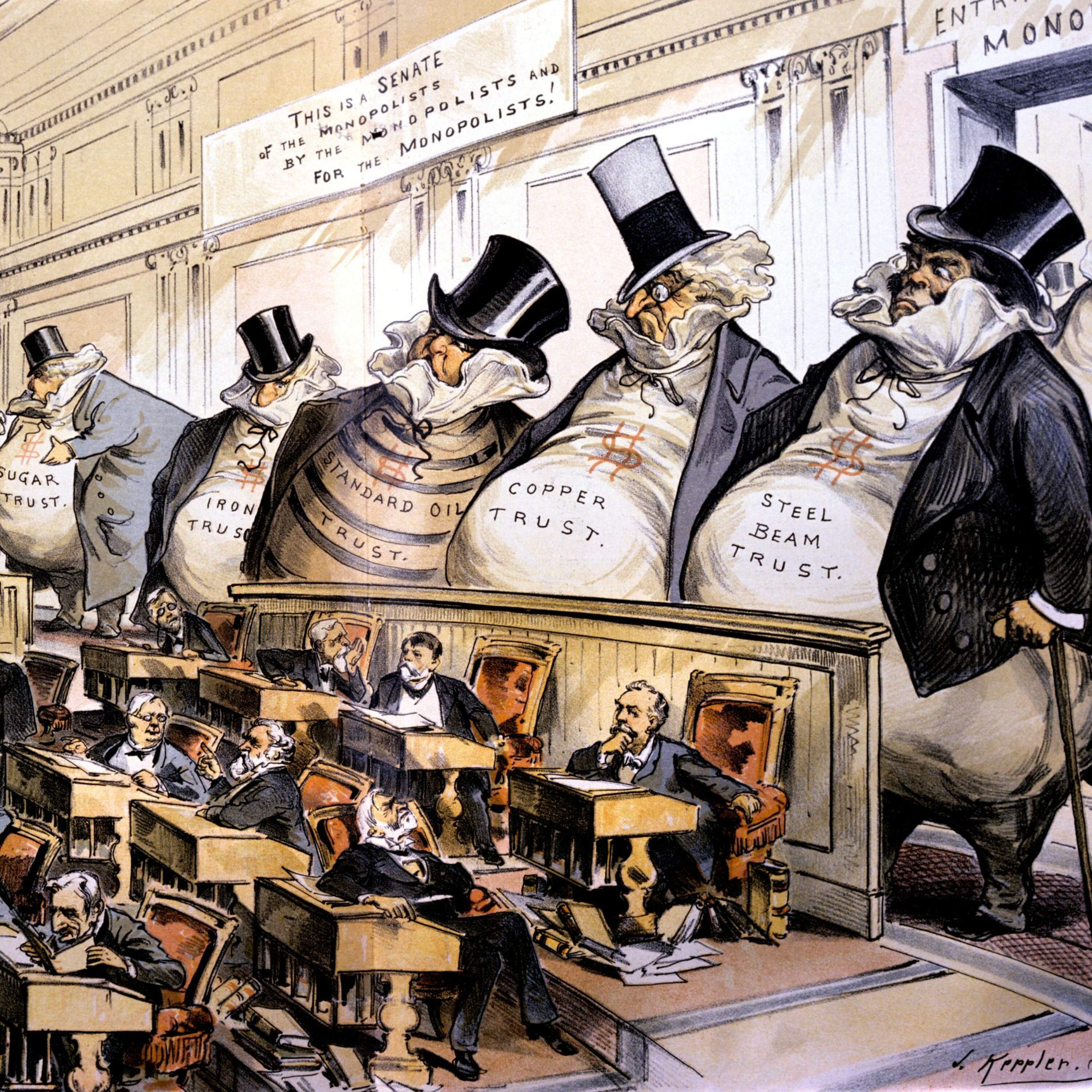
Free RiderStandard OilSherman Antitrust Act

Who's financing Meta's massive AI data center?

9 min

In a rural pocket of northeastern Louisiana, Meta is building a $30 billion data center called Hyperion. But it’s not being completely financed with Meta’s own money. Today on the show, the opaque system of AI data center financing and why it’s fueling fears of a bubble.  Related episodes:  OpenAI’s deals are looking a little frothy (https://www.npr.org/2025/10/16/nx-s1-5575729/openais-deals-are-looking-a-little-frothy)  No AI data centers in my backyard! (https://www.npr.org/2025/10/22/nx-s1-5581445/no-ai-data-centers-in-my-backyard)  What $10B in data centers actually gets you (https://www.npr.org/2025/04/02/1242229718/ai-mississippi-jobs-data-centers-virginia) For sponsor-free episodes of The Indicator from Planet Money, subscribe to Planet Money+ via Apple Podcasts or at plus.npr.org (http://plus.npr.org/). Fact-checking by Sierra Juarez (https://www.npr.org/people/1268825622/sierra-juarez). Music by Drop Electric (https://dropelectric.bandcamp.com/). Find us: TikTok (https://www.tiktok.com/@planetmoney), Instagram (https://www.instagram.com/planetmoney/), Facebook (https://www.facebook.com/planetmoney), Newsletter (https://www.npr.org/newsletter/money).   To manage podcast ad preferences, review the links below: See pcm.adswizz.com (https://pcm.adswizz.com) for information about our collection and use of personal data for sponsorship and to manage your podcast sponsorship preferences. Learn more about sponsor message choices: podcastchoices.com/adchoices (https://podcastchoices.com/adchoices) NPR Privacy Policy (https://www.npr.org/about-npr/179878450/privacy-policy)

MetaHyperionBlue Owl Capital

Who’s buying all the beef?

9 min

President Trump has said he’d try to get more Argentine beef into the U.S. So who would actually do the buying? That’s a general theme with a lot of these trade deals — big numbers but vague details. When China says it’ll buy more soybeans, is it the government or companies that does the buying? When South Korea promises to invest in American shipyards, who’s actually doing that?  Today on the show, we dig into two questions from listeners and hear directly from an Argentine butcher. Related episodes:  Why beef prices are so high (https://www.npr.org/2025/09/15/nx-s1-5539846/why-beef-prices-are-so-high) How the South is trying to win the EV race (https://www.npr.org/2023/11/02/1197956548/evs-automakers-incentives-southeast) For sponsor-free episodes of The Indicator from Planet Money, subscribe to Planet Money+ via Apple Podcasts or at plus.npr.org (http://plus.npr.org/). Fact-checking by Sierra Juarez (https://www.npr.org/people/1268825622/sierra-juarez). Music by Drop Electric (https://dropelectric.bandcamp.com/). Find us: TikTok (https://www.tiktok.com/@planetmoney), Instagram (https://www.instagram.com/planetmoney/), Facebook (https://www.facebook.com/planetmoney), Newsletter (https://www.npr.org/newsletter/money).   To manage podcast ad preferences, review the links below: See pcm.adswizz.com (https://pcm.adswizz.com) for information about our collection and use of personal data for sponsorship and to manage your podcast sponsorship preferences. Learn more about sponsor message choices: podcastchoices.com/adchoices (https://podcastchoices.com/adchoices) NPR Privacy Policy (https://www.npr.org/about-npr/179878450/privacy-policy)

Argentine beefTrumpTrade deals

Pay transparency. The WhatsApp and Instagram decision. Our beef with screwworms.

9 min

It’s … Indicators of the Week! Our weekly look at some of the most fascinating economic numbers from the news.  On today’s episode: the effects of pay transparency (https://www.nber.org/papers/w34480), Meta’s big win, and freaky flies and beef.  Related episodes:  Are we entering a new dawn for antitrust enforcement? (https://www.npr.org/2022/06/08/1103836051/are-we-entering-a-new-dawn-for-antitrust-enforcement)  Why beef prices are so high (https://www.npr.org/2025/09/18/nx-s1-5534424/beef-prices-record-high-cost)  For sponsor-free episodes of The Indicator from Planet Money, subscribe to Planet Money+ via Apple Podcasts or at plus.npr.org (http://plus.npr.org/). Fact-checking by Sierra Juarez (https://www.npr.org/people/1268825622/sierra-juarez). Music by Drop Electric (https://dropelectric.bandcamp.com/). Find us: TikTok (https://www.tiktok.com/@planetmoney), Instagram (https://www.instagram.com/planetmoney/), Facebook (https://www.facebook.com/planetmoney), Newsletter (https://www.npr.org/newsletter/money).   To manage podcast ad preferences, review the links below: See pcm.adswizz.com (https://pcm.adswizz.com) for information about our collection and use of personal data for sponsorship and to manage your podcast sponsorship preferences. Learn more about sponsor message choices: podcastchoices.com/adchoices (https://podcastchoices.com/adchoices) NPR Privacy Policy (https://www.npr.org/about-npr/179878450/privacy-policy)
Pay TransparencyWage IncreaseColorado

How to avoid scammers after a natural disaster

9 min

When people lose their homes to wildfire, hurricanes or flooding, they're eager to rebuild. But scammers are also ready to take advantage. On today’s show, the lucrative business of contractor fraud and advice on how to avoid them. Related episodes: An indicator lost: Big disaster costs (https://www.npr.org/2025/06/04/1253616079/an-indicator-lost-big-disaster-costs)  When insurers can’t get insurance (https://www.npr.org/2023/06/22/1183854206/when-insurers-cant-get-insurance)  Selling safety in the fight against wildfires (https://www.npr.org/2023/09/21/1197954265/selling-safety-in-the-fight-against-wildfires)  For sponsor-free episodes of The Indicator from Planet Money, subscribe to Planet Money+ via Apple Podcasts or at plus.npr.org (http://plus.npr.org/). Fact-checking by Corey Bridges. Music by Drop Electric (https://dropelectric.bandcamp.com/). Find us: TikTok (https://www.tiktok.com/@planetmoney), Instagram (https://www.instagram.com/planetmoney/), Facebook (https://www.facebook.com/planetmoney), Newsletter (https://www.npr.org/newsletter/money).   To manage podcast ad preferences, review the links below: See pcm.adswizz.com (https://pcm.adswizz.com) for information about our collection and use of personal data for sponsorship and to manage your podcast sponsorship preferences. Learn more about sponsor message choices: podcastchoices.com/adchoices (https://podcastchoices.com/adchoices) NPR Privacy Policy (https://www.npr.org/about-npr/179878450/privacy-policy)

Contractor ScamsNatural DisastersWildfire

Looking for love in the auto supply chain

9 min

Foreign automakers already have huge assembly plants in the U.S., but lots of parts and materials come from overseas.  To avoid costly tariffs, they gotta buy American. But … How does one meet those suppliers? How do you build a new relationship with them? The answer: Speed dating.  Related episodes:  The old trade war that brought foreign carmakers to the U.S. (https://www.npr.org/2025/05/21/1252663606/the-old-trade-war-that-brought-foreign-carmakers-to-the-us) Tariffs: What are they good for? (https://www.npr.org/2025/04/02/1242229719/planet-money-the-case-for-tariffs) For sponsor-free episodes of The Indicator from Planet Money, subscribe to Planet Money+ via Apple Podcasts or at plus.npr.org (http://plus.npr.org/). Fact-checking by Tyler Jones. Music by Drop Electric (https://dropelectric.bandcamp.com/). Find us: TikTok (https://www.tiktok.com/@planetmoney), Instagram (https://www.instagram.com/planetmoney/), Facebook (https://www.facebook.com/planetmoney), Newsletter (https://www.npr.org/newsletter/money).   To manage podcast ad preferences, review the links below: See pcm.adswizz.com (https://pcm.adswizz.com) for information about our collection and use of personal data for sponsorship and to manage your podcast sponsorship preferences. Learn more about sponsor message choices: podcastchoices.com/adchoices (https://podcastchoices.com/adchoices) NPR Privacy Policy (https://www.npr.org/about-npr/179878450/privacy-policy)

TariffsAuto Supply ChainBuy American

How to make switching jobs not terrifying

9 min

The U.S. labor market is stagnant right now, with little hiring and lots of people holding onto their jobs for dear life. In Denmark, there’s a different kind of labor system where it’s easy for employers to hire and fire, but at the same time people have a strong safety net in-between jobs. Today on the show, we learn how “flexicurity” works through the story of a Danish woman who left her job, and we ask how the model could work in the U.S. Related episodes: Why do we live in unusually innovative times? (https://www.npr.org/2025/10/14/nx-s1-5573115/why-do-we-live-in-unusually-innovative-times)How Marxism went from philosophy to cudgel (https://www.npr.org/2025/10/28/nx-s1-5587923/how-marxism-went-from-philosophy-to-cudgel)Ozempic's biggest side effect: Turning Denmark into a 'pharmastate'? (https://www.npr.org/sections/planet-money/2024/07/26/g-s1-13534/ozempic-biggest-side-effect-denmark-pharmastate) For sponsor-free episodes of The Indicator from Planet Money, subscribe to Planet Money+ via Apple Podcasts or at plus.npr.org (http://plus.npr.org/). Fact-checking by Tyler Jones. Translation from Jasmine Lolila. Music by Drop Electric (https://dropelectric.bandcamp.com/). Find us: TikTok (https://www.tiktok.com/@planetmoney), Instagram (https://www.instagram.com/planetmoney/), Facebook (https://www.facebook.com/planetmoney), Newsletter (https://www.npr.org/newsletter/money).   To manage podcast ad preferences, review the links below: See pcm.adswizz.com (https://pcm.adswizz.com) for information about our collection and use of personal data for sponsorship and to manage your podcast sponsorship preferences. Learn more about sponsor message choices: podcastchoices.com/adchoices (https://podcastchoices.com/adchoices) NPR Privacy Policy (https://www.npr.org/about-npr/179878450/privacy-policy)

FlexicurityDenmarkLabor Market

Why you overpaid at that online auction

9 min

Ever put in the winning bid for something on an auction site only to realize you significantly overpaid? Yeah, there’s a phrase for that. On today’s show: the winner’s curse. Richard Thaler’s new book with Alex O. Imas is The Winner’s Curse: Behavioral Economics Anomalies, Then and Now (https://www.simonandschuster.com/books/The-Winners-Curse/Richard-H-Thaler/9781982165116).Read Planet Money’s newsletter on the winner’s curse (https://www.npr.org/sections/planet-money/2025/11/11/g-s1-96954/how-to-avoid-the-winners-curse). For sponsor-free episodes of The Indicator from Planet Money, subscribe to Planet Money+ via Apple Podcasts or at plus.npr.org (http://plus.npr.org/). Fact-checking by Sierra Juarez (https://www.npr.org/people/1268825622/sierra-juarez). Music by Drop Electric (https://dropelectric.bandcamp.com/). Find us: TikTok (https://www.tiktok.com/@planetmoney), Instagram (https://www.instagram.com/planetmoney/), Facebook (https://www.facebook.com/planetmoney), Newsletter (https://www.npr.org/newsletter/money).   To manage podcast ad preferences, review the links below: See pcm.adswizz.com (https://pcm.adswizz.com) for information about our collection and use of personal data for sponsorship and to manage your podcast sponsorship preferences. Learn more about sponsor message choices: podcastchoices.com/adchoices (https://podcastchoices.com/adchoices) NPR Privacy Policy (https://www.npr.org/about-npr/179878450/privacy-policy)

Winner's CurseRichard ThalerBehavioral Economics

50-year mortgages, falling real wages, and doing your rideshare due diligence

9 min

It’s … Indicators of the Week! We look at some of the most fascinating economic numbers from the news and bring them to you. On today’s episode: The cost of living is outstripping wage growth (https://institute.bankofamerica.com/content/dam/economic-insights/paycheck-to-paycheck.pdf) for most of us, the math (https://apnews.com/article/home-prices-50-year-mortgage-trump-56a931881ca6f6efeccf2de0333a83bd) behind the Trump administration’s proposed 50-year mortgages, and how we’re just giving Uber and Lyft free money (https://www.nber.org/papers/w34441).  Related episodes:  Trump's plans for the housing market (https://www.npr.org/2024/11/26/1215240061/indicator-trump-plan-housing-market)  The Money Illusion: Have Americans really gotten a raise? (https://www.npr.org/2021/11/10/1054451446/the-money-illusion-have-americans-really-gotten-a-raise)  For sponsor-free episodes of The Indicator from Planet Money, subscribe to Planet Money+ via Apple Podcasts or at plus.npr.org (http://plus.npr.org/). Fact-checking by Sierra Juarez (https://www.npr.org/people/1268825622/sierra-juarez). Music by Drop Electric (https://dropelectric.bandcamp.com/). Find us: TikTok (https://www.tiktok.com/@planetmoney), Instagram (https://www.instagram.com/planetmoney/), Facebook (https://www.facebook.com/planetmoney), Newsletter (https://www.npr.org/newsletter/money).   To manage podcast ad preferences, review the links below: See pcm.adswizz.com (https://pcm.adswizz.com) for information about our collection and use of personal data for sponsorship and to manage your podcast sponsorship preferences. Learn more about sponsor message choices: podcastchoices.com/adchoices (https://podcastchoices.com/adchoices) NPR Privacy Policy (https://www.npr.org/about-npr/179878450/privacy-policy)

50-year mortgagesTrump administrationFalling real wages

Trump's backup options for tariffs

9 min

The U.S. Supreme Court may soon rule on President Trump’s favorite tariff law.  It could render them moot, but that doesn’t mean the end of tariffs. On today’s show, we explain the president’s back-up options for imposing tariffs. Related episodes:  Are Trump’s tariffs legal? (https://www.npr.org/2025/06/11/1253992700/tariffs-ieepa-trump-legal-emergencies-law)  Worst. Tariffs. Ever. (https://www.npr.org/2024/12/11/1218506684/worst-tariffs-ever-update)   Three ways companies are getting around tariffs (https://www.npr.org/2025/08/26/nx-s1-5515756/three-ways-companies-are-getting-around-tariffs)   For sponsor-free episodes of The Indicator from Planet Money, subscribe to Planet Money+ via Apple Podcasts or at plus.npr.org (http://plus.npr.org/). Fact-checking by Sierra Juarez (https://www.npr.org/people/1268825622/sierra-juarez). Music by Drop Electric (https://dropelectric.bandcamp.com/). Find us: TikTok (https://www.tiktok.com/@planetmoney), Instagram (https://www.instagram.com/planetmoney/), Facebook (https://www.facebook.com/planetmoney), Newsletter (https://www.npr.org/newsletter/money).   To manage podcast ad preferences, review the links below: See pcm.adswizz.com (https://pcm.adswizz.com) for information about our collection and use of personal data for sponsorship and to manage your podcast sponsorship preferences. Learn more about sponsor message choices: podcastchoices.com/adchoices (https://podcastchoices.com/adchoices) NPR Privacy Policy (https://www.npr.org/about-npr/179878450/privacy-policy)

Trump TariffsSupreme CourtIEEPA

Who is the World Cup for anymore?

9 min

The World Cup is coming up, and it’s going to cost a pretty penny if you are hoping to attend. Today on the show, we talk to NPR Senior Business editor and World Cup superfan about why the 2026 World Cup will likely be the most expensive in history and why even finding a ticket is more difficult.  Related episodes:  Peacock, potassium and other Paris Olympics Indicators (https://www.npr.org/2024/07/26/1197967896/peacock-olympics-paris-2024-bananas) Why the Olympics cost so much (https://www.npr.org/2024/08/01/1197967951/paris-2024-olympics-hosting-costs) You can't spell Olympics without IP (https://www.npr.org/2024/08/08/1197968045/paris-olympics-trademarks-enforcement-intellectual-property) For sponsor-free episodes of The Indicator from Planet Money, subscribe to Planet Money+ via Apple Podcasts or at plus.npr.org (http://plus.npr.org/). Fact-checking by Sierra Juarez (https://www.npr.org/people/1268825622/sierra-juarez). Music by Drop Electric (https://dropelectric.bandcamp.com/). Find us: TikTok (https://www.tiktok.com/@planetmoney), Instagram (https://www.instagram.com/planetmoney/), Facebook (https://www.facebook.com/planetmoney), Newsletter (https://www.npr.org/newsletter/money).   To manage podcast ad preferences, review the links below: See pcm.adswizz.com (https://pcm.adswizz.com) for information about our collection and use of personal data for sponsorship and to manage your podcast sponsorship preferences. Learn more about sponsor message choices: podcastchoices.com/adchoices (https://podcastchoices.com/adchoices) NPR Privacy Policy (https://www.npr.org/about-npr/179878450/privacy-policy)

FIFA World Cup 2026Ticket PricesDynamic Pricing