The Indicator from Planet Money
ExplorePodcast overview and latest content
EpisodesBrowse the full episode archive
TopicsDiscover episodes by category
PostsBrowse published articles & write-ups

Podcast

  • Explore
  • Episodes
  • Topics
  • Posts

Recent Episodes

  • Want a 2.5% mortgage? Buy it.
  • The anxiety rattling China’s youth
  • Why Paramount went looney tunes for Warner Bros.
  • Should the families of organ donors be compensated?
  • ICE is bad for business, heat is bad for coffee, and sci-fi is bad for markets

Links

  • Apple Podcasts
  • Overcast

About

The Indicator from Planet Money

The Indicator from Planet Money

A bite-sized show about big ideas. From the people who make Planet Money, The Indicator helps you make sense of what's happening in today's economy. It's a quick hit of insight into money, work, and business. Monday through Friday, in 10 minutes or less.

Powered byPodRewind
    The Indicator from Planet Money
    Episode•February 24, 2025•9 min

    What if our income was taxed ... totally differently?

    We are back to answer YOUR listener questions. This time, we answer why bananas can be considered the 'unbothered fruit', what a flat income tax would actually look like, and how extended-hours stock trading works. If you have your own question about the economy, please email us at indicator@npr.org (mailto:indicator@npr.org). Related episodes: My Favorite Tax Loophole (Apple (https://podcasts.apple.com/us/podcast/planet-money/id290783428?i=1000691596415) / Spotify (https://open.spotify.com/episode/7AY0yaj2k0W3obOSCfm6m4?si=b2f8d937e3a04ca6)) The cautionary tale of a recovering day trading addict (Apple (https://podcasts.apple.com/us/podcast/the-indicator-from-planet-money/id1320118593?i=1000686210451) / Spotify (https://open.spotify.com/episode/5mH331cqbEpencgyA5XKKM?si=746636daacf44fe1)) So imPORTant: Bananas, frogs, and... Bob's?? (Apple (https://podcasts.apple.com/us/podcast/planet-money/id290783428?i=1000672763107) / Spotify (https://open.spotify.com/episode/014ldKIwsHKmOSgzRmDtnd?si=60509225637d481f)) For sponsor-free episodes of The Indicator from Planet Money, subscribe to Planet Money+ via Apple Podcasts or at plus.npr.org (http://plus.npr.org/). Fact-checking by Sierra Juarez (https://www.npr.org/people/g-s1-26724/sierra-juarez). Music by Drop Electric (https://dropelectric.bandcamp.com/). Find us: TikTok (https://www.tiktok.com/@planetmoney), Instagram (https://www.instagram.com/planetmoney/), Facebook (https://www.facebook.com/planetmoney), Newsletter (https://www.npr.org/newsletter/money). To manage podcast ad preferences, review the links below: See pcm.adswizz.com (https://pcm.adswizz.com) for information about our collection and use of personal data for sponsorship and to manage your podcast sponsorship preferences. Learn more about sponsor message choices: podcastchoices.com/adchoices (https://podcastchoices.com/adchoices) NPR Privacy Policy (https://www.npr.org/about-npr/179878450/privacy-policy)

    Apple PodcastsOvercast

    Transcript

    0:01
    Npr.
    0:12
    Welcome to Listener Questions.
    0:17
    Three listener questions, zero competition.
    0:21
    Rylan, that doesn't actually sound like an appealing pitch.
    0:24
    Let me try. I can do this.
    0:26
    Oh, hello. Robert Smith.
    0:28
    Hello. How about this? Three listener questions all explained into your very ears.
    0:36
    Yeah, let's go with that.
    0:37
    Yeah.
    0:38
    This is the indicator from Planet Money. I'm Jareon Woods. Today we answer your questions that you, the listeners, have sent in.
    0:46
    We are taking on the resilient banana, a flat rate income tax and stock trading all night long.
    0:53
    All night long.
    0:55
    That's all coming up after the break. All right, Waylon, your question is up first. It comes from Tiffany Green.
    1:05
    My question is about bananas. Can we talk about how they stay so cheap no matter the time of year, the crazy inflated prices of other foods, or weather disruptions? It never seems to bother bananas. They're a very unbothered fruit.
    1:20
    The unbothered fruit. So poetic.
    1:23
    I know. It got me thinking, actually, about the very dark history of banana cultivation and everything that has led to the banana being so cheap for American consumers today. So I took the unbothered fruit description to our expert, Luis Ribera, a professor at Texas A and M University.
    1:42
    Yeah, that's a very interesting way of putting it. But yes, you know, bananas.
    1:47
    Interesting.
    1:49
    Luis works on trade policy's impact on agricultural production, so he's familiar with this world. He says it really is true. Bananas are both cheap and their prices barely move.
    2:01
    Yeah.
    2:01
    I've often wondered how they keep banana prices so steady.
    2:05
    Yeah, we've all seen food prices skyrocket since the pandemic started. Strawberries, you know, saw around a dollar increase per pound from 2020 to 2022. Then you look at bananas over that same period, and their price spike was 6 cents.
    2:21
    6 cents. Pretty small. My fruit salad is 100% bananas. Now it's just a banana.
    2:26
    Does that mean you're just eating a banana?
    2:27
    It's just a banana.
    2:30
    Louise says bananas have a buffer from market pressure. Banana buffer.
    2:36
    The way that banana production is is very low input, high yield product. You'll be able to absorb more of those changes and not pass it down to the consumers as you have other products, for example.
    2:52
    That high yield is important because banana farmers make their money more on volume than per unit. But Luis explains there are a lot of things in favor of keeping banana prices cheap and price resil. Bananas aren't as perishable or expensive to produce as berries. They're less seasonal. So for all these reasons, the banana is, for now, our unbothered fruit.
    3:17
    Unbothered fruit. Fruit.
    3:19
    I think there's a future for you in banana promotion, Robert.
    3:23
    Love it.
    3:24
    Thank you, Waylon. Next up, we have a question for you, Mr. Robert Smith.
    3:29
    Hi, my name is Frank Rincon from Dallas, Texas. My understanding is that a flat tax has a bigger effect on those making less money. But if the IRS were to go to a flat tax for individuals, what rate would everyone have to pay?
    3:43
    Okay, I am really glad you're taking this on, Robert. We've actually gotten two emails about the possibility of a flat rate tax. People want to know.
    3:52
    Yeah, it's been popping up lately. Six states, including Arizona and Louisiana, have decided to charge their income taxes through a flat rate, meaning only one tax rate is charged, whether you make, I don't know, $50,000 or $50 million.
    4:06
    And which of those two do you make, Robert?
    4:08
    I am not legally allowed to tell you that. Anyway, when the federal government taxes my $50 million, I mean, whatever my income is, it's at a progressive rate right now. So people are charged more like me the more money they make.
    4:23
    So under a flat tax, somebody on a lower income who's paying a minimal rate or even no federal tax at all will pay more. But people in the top bracket who are paying a higher rate will likely pay less.
    4:35
    Yeah, and that's definitely true. But it is a mixed bag because ideally, when you have a flat tax, it'll bring in a lot more money from the super wealthy because it's closing loopholes and limiting deductions.
    4:46
    Now, Robert, you mentioned a bunch of states that are taking on a flat income tax. But the listener is asking about the federal government, so is that even a conversation? That's happening?
    4:57
    Most recently, it's come up through the nonprofit Tax foundation, who released a proposal on how it could work at a federal level, too.
    5:04
    And to our listener's question, did they come up with a number?
    5:08
    They did. Drum roll, please. The Tax foundation calls for a 20% flat tax. Right now, it's somewhere between 10 and 37%. But to make enough tax revenue, it's not just about the headline rate. The proposal would find new income to tax by eliminating some major credits and deductions. The nonprofit argues their plan would increase the labor supply, gdp, wages, while raising hundreds of billions of dollars in tax revenue over the next decade.
    5:38
    All right, this all sounds a little too good to be true. The flat taxers. Is there pushback?
    5:46
    Yeah. Is there ever? I've read that someone called a flat rate income tax class warfare, a roundabout way of reducing the tax burden for higher income households while taking away income Incentives. It is hard to change something this big in the American economy without a lot of people hating you.
    6:04
    Okay, well, Frank Rincon, thank you for your question. Darian, you are up next with a question from Benjamin Gray from Denver, Colorado.
    6:12
    My question for you is why is after hours stock trading a thing? Can I, as a normal run of the mill person, trade after hours? Why do prices after hours sometimes move with seemingly more volatility than during trading hours?
    6:26
    So let's start with the basics. US Stock markets like the New York Stock Exchange or the Nasdaq are open from 9:30am to 4pm Eastern Monday through Friday. And those hours are in place for a reason. It means that everybody in the US can trade on an even playing field.
    6:43
    Yeah, it's like they all get the same business news and everyone goes to sleep at roughly the same time.
    6:48
    But if it's in the evening and you get a notion that you just have to buy some, I don't know, Home Depot shares, there is one way you can do that, which is extended hours trading. This trading happens electronically between a smaller number of traders earlier in the morning and further into the evening. Ben Johnson is with the investment services company Morningstar, and we asked why it became a thing.
    7:12
    After hours stock trading is a thing for many of the same reasons that Wendy's Spicy Chicken Sandwich Pringles are a thing. It's not because they need to be a thing, but it's because there's demand there.
    7:26
    That's a thing. Wendy's Spicy Chicken Sandwich Pringles. I haven't.
    7:30
    It's the first time learning about this.
    7:32
    I have a different question. Let's answer this question instead.
    7:35
    Do not answer this question.
    7:38
    I have not heard about these Pringles either. But going back to stock trading hours, it is a disadvantage to trade after hours. You have less liquidity for one thing.
    7:49
    So, Darian, I'm just going to hop in here to translate what less liquidity means, please. During the day, there's so many people buying and selling stocks that if you want to sell a stock at $200.00 during the trading day, you are more likely to find someone willing to pay that price, $200. Because there are more people, more money, more liquidity.
    8:10
    Exactly. So the risk with after hours trading is that there would be less liquidity. If somebody wanted to sell the same stock after hours, the highest bid might only be $190. Morningstar's Ben Johnson explains that fewer traders means more volatility. Outside the normal trading day after hours
    8:28
    prices tend to be more erratic precisely because there's less trading, there's less buying and selling activity, and by extension, there's sort of less informational content going into setting the prices.
    8:43
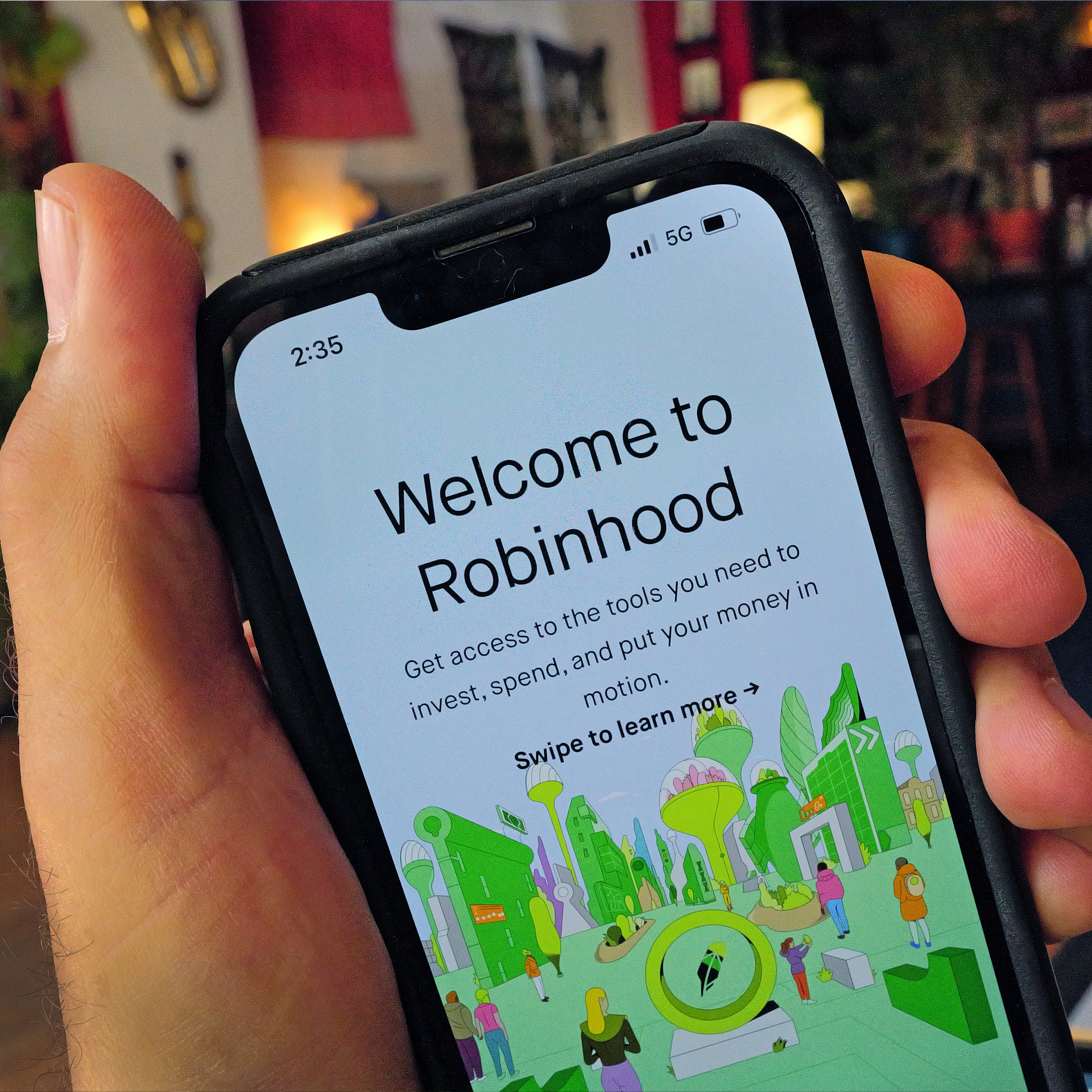
    Robin Hood, Charles Schwab and others have taken this extended hours concept one step further, 24 hour trading Monday through Friday. They kind of create their own market for when the real stock markets are closed. And also, the New York Stock Exchange wants approval to extend its own hours to 22 hours a day.
    9:06
    Thank you, Ben, for the question. And also to Tiffany and Frank, if you have your own economics question, please email us. We are@indicatorpr.org this episode was produced by
    9:18
    Cooper Cats McKim with engineering by Gilly Moon. It was fact teched by Sierra Juarez. Cake and Cannon edits the show. And the Indicator is a production of NPR.

    What if our income was taxed ... totally differently?

    0:00
    0:00

    Related Episodes

    The cautionary tale of a recovering day trading addict (Encore)

    The cautionary tale of a recovering day trading addict (Encore)

    Dec 29, 20259 min
    Day TradingGambling AddictionChris Garver
    Job retraining and the brain, DC dining, and Robinhood's sports bet

    Job retraining and the brain, DC dining, and Robinhood's sports bet

    Aug 22, 20259 min
    Job RetrainingMental HealthDepression
    Will the tax cuts pay for themselves?

    Will the tax cuts pay for themselves?

    Jul 8, 20258 min
    One Big Beautiful Bill ActArthur LafferLaffer Curve
    The cautionary tale of a recovering day trading addict

    The cautionary tale of a recovering day trading addict

    Jan 28, 20259 min
    Day TradingGambling AddictionChris Garver