The Indicator from Planet Money
ExplorePodcast overview and latest content
EpisodesBrowse the full episode archive
TopicsDiscover episodes by category
PostsBrowse published articles & write-ups

Podcast

  • Explore
  • Episodes
  • Topics
  • Posts

Recent Episodes

  • Want a 2.5% mortgage? Buy it.
  • The anxiety rattling China’s youth
  • Why Paramount went looney tunes for Warner Bros.
  • Should the families of organ donors be compensated?
  • ICE is bad for business, heat is bad for coffee, and sci-fi is bad for markets

Links

  • Apple Podcasts
  • Overcast

About

The Indicator from Planet Money

The Indicator from Planet Money

A bite-sized show about big ideas. From the people who make Planet Money, The Indicator helps you make sense of what's happening in today's economy. It's a quick hit of insight into money, work, and business. Monday through Friday, in 10 minutes or less.

Powered byPodRewind
    The Indicator from Planet Money
    Episode•December 29, 2025•9 min

    The cautionary tale of a recovering day trading addict (Encore)

    Seasons greetings from the The Indicator! On today's show, the story of a man who started buying and selling stocks as a hobby — and got seriously addicted. We also speak with a neuroeconomist about the human brain on day trading.  This piece originally aired Jan. 25, 2025.  Related episodes:  The young trolls of Wall Street are growing up (https://www.npr.org/2024/07/18/nx-s1-5043657/the-indicator-from-planet-money-the-young-trolls-of-wall-street-are-growing-up)  Invest like a Congress member (https://www.npr.org/2024/06/18/1197965254/stock-trading-congress-etfs-unusual-whales) For sponsor-free episodes of The Indicator from Planet Money, subscribe to Planet Money+ via Apple Podcasts or at plus.npr.org (http://plus.npr.org/). Fact-checking by Sierra Juarez (https://www.npr.org/people/1268825622/sierra-juarez). Music by Drop Electric (https://dropelectric.bandcamp.com/). Find us: TikTok (https://www.tiktok.com/@planetmoney), Instagram (https://www.instagram.com/planetmoney/), Facebook (https://www.facebook.com/planetmoney), Newsletter (https://www.npr.org/newsletter/money).   To manage podcast ad preferences, review the links below: See pcm.adswizz.com (https://pcm.adswizz.com) for information about our collection and use of personal data for sponsorship and to manage your podcast sponsorship preferences. Learn more about sponsor message choices: podcastchoices.com/adchoices (https://podcastchoices.com/adchoices) NPR Privacy Policy (https://www.npr.org/about-npr/179878450/privacy-policy)

    Apple PodcastsOvercast

    Transcript

    0:00
    Hey, everyone. Darian woods here. Happy holidays. For the next week, we are running some of our favorite shows from this year. Today's episode is about gambling addiction and the stock market.
    0:11
    Npr.
    0:23
    Chris Garver got interested in the stock market around 2010.
    0:27
    I had some savings and I thought there's no point in them being in, you know, savings accounts because the interest was so bad.
    0:34
    Chris started with what he describes as a sensible investment strategy. He bought shares in a range of large companies listed on the main British stock exchange.
    0:44
    But the deeper I got into it, you start going into forums and people start recommending stocks and you see some of the returns that were happening. And then that kind of opened up a another world.
    0:58
    It was a world of buying smaller, more volatile companies or using special trading contracts in ways that magnify your gains or losses. Chris remembers investing in one company, prospecting
    1:10
    for oil news hit of a new discovery. And in two days I'd made over £80,000. And I thought, right, you know, I can make some serious money here.
    1:22
    £80,000 is about US$100,000. And Chris saw what he was doing as investing, an intellectual hobby on the side of his day job in digital media. What he didn't think was that his trading could be gambling. This is the indicator from Planet Money. I'm Waylon Wong.
    1:39
    And I'm Darian Woods. Buying and selling quickly on the stock market is known as day trading. And with the dawn of apps like Robinhood and Webull, winning or losing fortunes is easier than ever. So is day trading gambling. Today on the show, we hear Chris's story, and we speak with a neuroeconomist about the human brain on day trading. After his big win, Chris Garver started to lose money on his investments. He would sometimes win back money, but over the next few years, he had eventually whittled away all of his savings. So Chris desperately tried to fund even more trading.
    2:30
    At one point, I was spinning nine of my own personal credit cards and another four in my wife's name, which she didn't even know about.
    2:40
    By 2019, the losses were adding up. Chris now owed the equivalent of around $110,000. So he made a vow. He would focus on disciplined bets, wipe away those losses, and get out of day trading. And by mid-2020, he did achieve the first part, paying back his debts. But getting out of day trading, not so much.
    3:01
    What I promised to myself wasn't relevant anymore because I was an amazing trader again. And I carried on.
    3:10
    In fact, after being laid off from his day job due to the COVID pandemic, Chris started day trading full time.
    3:16
    I went for it and then unfortunately, within two years, all those profits had gone and I was 145,000 pounds in debt. My wife actually thought I was having an affair because she could see I was being secretive. I wasn't being myself. I remember driving on a freeway with my iPhone in a cradle, you know, with the markets live, you know, prices on my handset, and I'm driving and I'm looking over and looking if an alert comes up, I mean, that's how wired I had become. It was insanity.
    3:52
    Day trading was now an out of control compulsion. Chris called his brother, who urged him to come clean to his wife.
    3:59
    That was so hard because. Because there were feelings of sense of guilt, of shame, of embarrassment. You know, I mean, I'm supposed to be, you know, the breadwinner winning male who provides for the family. And my wife, I mean, she was shocked. She was annoyed as hell, you know, when I told her that I'd opened four credit cards in her name without her even knowing. I mean, you know, there's that whole trust thing in a marriage, and I blew that wide open.
    4:33
    Chris's wife told him to get help. He had some form of a gambling addiction. But in day trading, I didn't think
    4:41
    I was addicted to gambling. I didn't bet on horse racing, on sports betting, I didn't go into casinos. I didn't bet on poker. I didn't bet.
    4:52
    But day trading, or buying crypto or foreign currencies, that can be gambling. That's how a lot of people use apps like Robinhood or Webull. Camellia Kunin is a finance professor at the University of North Carolina, Chapel Hill.
    5:05
    These apps, basically, they're like a lottery on steroids, right? They're very exciting, really easy to use. You have your phone in your hand all times. And I think a lot of people can get into trouble.
    5:18
    Camelia points out that most investing is pretty boring. You buy a bunch of companies for, say, $10,000, and then if they do well, it. It might take you a year to gain maybe 10% if you're lucky, $1,000. If they do poorly, well, then you usually lose some, but not all of your money. It's really quite far away from an occasional lotto ticket.
    5:41
    But any kind of bet where there's a small chance of a huge payoff can be tempting. That also applies to the stock market.
    5:48
    There are studies where, you know, we put people on brain scanners and they're given the opportunity to, to Invest in assets. But we can vary in that. In the experiment, we can vary just how much they look like lotteries or not. And what you find is that people do. A lot of people have this even in the brain, people love the chance of having a huge payoff, even though that chance is tiny. Right. We are sort of hardwired to fixate on these huge payoffs.
    6:20
    In fact, there's evidence that people are attracted to investing in companies that have had a giant gain, even if it's just once.
    6:27
    Some investors get hooked on the idea that this could happen again. Right. That they could get this huge return again. So these stocks that have a tiny chance, but for a very, very high payoff, those stocks can attract a lot of people.
    6:39
    And further fueling this gamification of the stock market is what's called options. These are special contracts that give you the opportunity to buy or sell stocks at a certain price.
    6:49
    All right, so, Waylon, let's explain how these work with what's called a call option.
    6:54
    Let's do it.
    6:54
    Okay, so instead of paying, say, $200 for one Amazon SH share, you pay, say, $5 for the option to buy the Amazon share for $200 in the future. And so if Amazon's share price goes to $250, that's very good for you.
    7:11
    Yeah, that would be amazing. It would mean I could now pay $200 for an Amazon share worth $250. So it's like I win $50.
    7:20
    Yeah. So you've basically made 10 times your money minus that $5 you paid for the option. But I, on the other hand, if the share price of Amazon goes down.
    7:28
    No, don't say it.
    7:29
    That $5 call option could be worthless.
    7:32
    Surely that would never happen to me. I'm an investing genius.
    7:36
    Yeah, you are.
    7:36
    And of course, people aren't just putting $5 on the line. They're buying up lots of options, like maybe 1,000 of them for $5,000.
    7:45
    Yeah. And just like gambling options can give you all or nothing payoffs.
    7:50
    Chris played with similar ways of trying to magnify his wins. What it ended up doing was magnifying his losses. Most day traders, he was playing against the pros, basically handing over his money to professional investors.
    8:04
    The average investor just doesn't have the knowledge. They don't understand all of these payoff structures. And the institutional investors on the other side of the trades will take advantage of that.
    8:16
    And after Chris sought help, he realized he had a day trading addiction. His brother lent him some money to help with his debts. And he told the banks everything that had happened.
    8:27
    I guess it was kind of a relief in some ways for that to happen. There is a route out of that and that you can come out and basically recover from it.
    8:39
    A year later, Chris founded an organization called Project well Being. It runs gambling awareness workshops and helps companies develop policies and support for employees struggling with gambling.
    8:50
    For a lot of people, it's a real eye opener. People just don't realise how much of a situation, an issue that it is out there.
    8:58
    Chris is still married, but he still owes the banks a lot of money. And through his work, not the markets, he hopes to pay his debts back. This episode was produced by Angel Carreras with engineering by Kwesi Lee. It was fact checked by Sarah Juarez. Paddy Hirsch edited this episode and Kate Concannon edits the show. The Indicator is a production of NPR.

    The cautionary tale of a recovering day trading addict (Encore)

    0:00
    0:00

    Related Episodes

    Do traders who place big bets make big money?

    Do traders who place big bets make big money?

    Feb 24, 202610 min
    Options TradingOption WhalesTaiwan Semiconductor
    Can a good story change economic reality?

    Can a good story change economic reality?

    Jan 14, 20268 min
    Narrative EconomicsRobert ShillerDaron Acemoglu
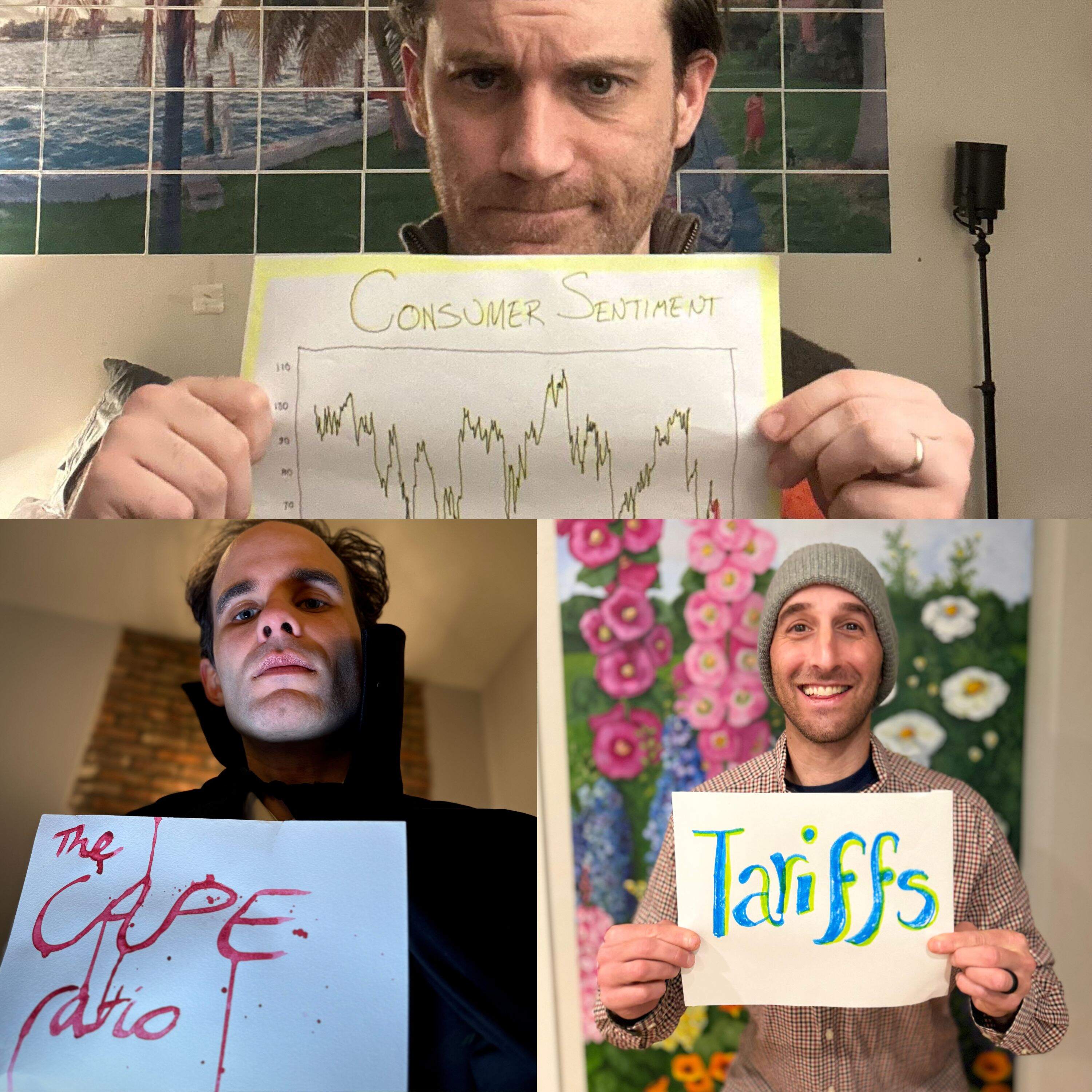
    Tariffs. Consumer sentiment. Cape Ratio. Pick The Indicator of The Year!

    Tariffs. Consumer sentiment. Cape Ratio. Pick The Indicator of The Year!

    Dec 19, 20259 min
    TariffsConsumer SentimentCAPE Ratio
    Job retraining and the brain, DC dining, and Robinhood's sports bet

    Job retraining and the brain, DC dining, and Robinhood's sports bet

    Aug 22, 20259 min
    Job RetrainingMental HealthDepression