The Indicator from Planet Money
ExplorePodcast overview and latest content
EpisodesBrowse the full episode archive
TopicsDiscover episodes by category
PostsBrowse published articles & write-ups

Podcast

  • Explore
  • Episodes
  • Topics
  • Posts

Recent Episodes

  • Want a 2.5% mortgage? Buy it.
  • The anxiety rattling China’s youth
  • Why Paramount went looney tunes for Warner Bros.
  • Should the families of organ donors be compensated?
  • ICE is bad for business, heat is bad for coffee, and sci-fi is bad for markets

Links

  • Apple Podcasts
  • Overcast

About

The Indicator from Planet Money

The Indicator from Planet Money

A bite-sized show about big ideas. From the people who make Planet Money, The Indicator helps you make sense of what's happening in today's economy. It's a quick hit of insight into money, work, and business. Monday through Friday, in 10 minutes or less.

Powered byPodRewind
    The Indicator from Planet Money
    Episode•April 2, 2025•9 min

    What $10 billion in data centers actually gets you

    Billions of tech dollars flowing into a community to build data centers should transform a local economy ... right? Well, maybe not. On today's episode: Why data centers create few permanent jobs.And why communities might want them anyway. (https://wbhm.org/2025/data-centers-bring-billions-to-mississippi-are-the-investments-worth-the-risk/) Related episodes: Why China's DeepSeek AI is such a big deal (Apple (https://podcasts.apple.com/us/podcast/the-indicator-from-planet-money/id1320118593?i=1000685226780) / Spotify (https://open.spotify.com/episode/41lDbYiDbQorQNPdCLw21Q?si=N4rdnJf-ROium8P-cpJHmA)) Is AI overrated? (Apple (https://podcasts.apple.com/us/podcast/the-indicator-from-planet-money/id1320118593?i=1000663366364) / Spotify (https://open.spotify.com/episode/0Cx1SvScerT2OEP353JVLK?si=saQoXiBhTluqtLlGzV_z2g)) For sponsor-free episodes of The Indicator from Planet Money, subscribe to Planet Money+ via Apple Podcasts or at plus.npr.org (http://plus.npr.org/). Fact-checking by Sierra Juarez (https://www.npr.org/people/g-s1-26724/sierra-juarez). Music by Drop Electric (https://dropelectric.bandcamp.com/). Find us: TikTok (https://www.tiktok.com/@planetmoney), Instagram (https://www.instagram.com/planetmoney/), Facebook (https://www.facebook.com/planetmoney), Newsletter (https://www.npr.org/newsletter/money). To manage podcast ad preferences, review the links below: See pcm.adswizz.com (https://pcm.adswizz.com) for information about our collection and use of personal data for sponsorship and to manage your podcast sponsorship preferences. Learn more about sponsor message choices: podcastchoices.com/adchoices (https://podcastchoices.com/adchoices) NPR Privacy Policy (https://www.npr.org/about-npr/179878450/privacy-policy)

    Apple PodcastsOvercast

    Transcript

    0:00
    Npr. This is the indicator from Planet Money. I'm Adrian Ma and today we're joined by friend of the show, Stephen Bassaha from the Gulf States newsroom. What's up, Steven?
    0:20
    Hey, it is good to be with you, Adrian. And you know I live in Birmingham, Alabama, but today we're traveling just across the state line to Meridian, Mississippi.
    0:29
    Road trip. Thought we'd drive around, show it to you.
    0:33
    Yeah, please do.
    0:34
    Our tour guide is Bill Hanna. He's head of the East Mississippi Business Development Corporation. Basically think of him as Meridian's chief salesman.
    0:42
    Now Meridian, it is like a lot of small cities in the south. Great food, small town charm, and hunting for that one big break to turn around its poor economic fortune.
    0:53
    And Bill says that big break could finally be here. This is the largest announcement not in Meridian and Lauderdale county, but in the state of Mississippi.
    1:03
    It's the largest announcement like what ever or ever. And that is for a $10 billion private investment that would give Meridian a piece of the country's tech future.
    1:14
    All this stretch of land is about 300 acres and it's going to be a data center. Campus data centers. These are those big computer packed buildings which are the backbone of the Internet and the AI boom. Tech tech companies are spending billions to build them across the country.
    1:29
    Yeah, but while billions flooding into communities like Meridian might sound like an economy transforming event, there's one important catch. Data centers just don't hire many people.
    1:40
    On today's show, why billions of dollars in data center investments will lead to a lot fewer permanent jobs than you
    1:46
    might think and why communities might still want them any.
    1:55
    This huge data center project in Meridian, Mississippi, it actually shares the record for the largest private investment in state history. And it's tied with. Drumroll, please. Another data center.
    2:08
    The data center money is pouring in from all directions. You might remember President Donald Trump announced at the start of his presidency an initiative called Stargate. It's this investment of up to a half a trillion dollars from private sources to build and support data cent.
    2:24
    Yeah, but for all this hype and the sci fi names and such, the data centers themselves actually look pretty mundane, at least according to Kartik Hasanigar.
    2:34
    Yeah, it just looks like a warehouse, but instead of consumer products, you have, you know, racks of servers in there.
    2:40
    Yeah, I'm imagining like that server rack you might see in the back of an office, but like scaled up to like warehouse or factory size. Is that right?
    2:47
    That's exactly right. It's that same rack. But imagine rows and rows of those racks across a massive Like a Walmart smart warehouse size space.
    2:57
    Kartik is co director of the Wharton Business School's AI Research Center. We called him up to ask, what is the value of these data centers for the communities they're getting built in?
    3:06
    When you see numbers like a $10 billion data centered investment and you are asking what does it mean for our local economy, you have to really discount that number quite heavily.
    3:17
    And that discount comes because, you know, beyond the temporary construction jobs needed to build build data centers, they just don't hire many people.
    3:24
    They employ about 100 to 200 people as direct employees there. In fact, when Apple created a $1 billion data center in North Carolina, the news stories reported that there were less than 100 permanent jobs created as a result.
    3:41
    Kartik says the reason for this is because data centers are all about hardware. It's things like computer chips that make these data centers so expensive. By contrast, if you took a software company employing the same amount of people, it would actually take a lot less investment for them.
    3:57
    You know, what is the software company buying? They're buying computers and they're buying some software licenses. That's not much. You know, a laptop for every person, a monitor for every person.
    4:07
    In fact, Kartik says when it comes to job creation, a software company could spend just a fraction of that $10 billion to make as many jobs.
    4:17
    Personally, I would rather take 10% of that up $1 billion software industry investment.
    4:24
    10% of the investment. I mean, that's like a, like a full decimal place over, right? There's a pretty big difference in investment.
    4:32
    Yeah, you got to like shift it over by a whole zero, you know. But Kartik actually, as we kept talking, he kept adjusting that number lower and lower until finally he landed on 1%
    4:44
    of that investment going into software. That would be bigger than, you know, massive $10 billion investment into data centers.
    4:52
    So in that case, we'd be talking about $100 million versus $10 billion. You're saying that would mean more for a community?
    5:01
    I would say $100 million investment in software jobs should be comparable at least.
    5:07
    Okay, now to be clear, this money we're talking about, it's not coming from state or city pockets. These are private dol are putting up themselves. They're not public funds.
    5:18
    That said, Ms. is giving these upcoming data centers a 10 year break from some state taxes. They just have to hit a few conditions like creating at least 20 high paying jobs.
    5:28
    Yeah, not setting a very high bar there.
    5:30
    Right now none of this means that data centers are cost free. For communities, in fact, they often come with a big cost, that is energy.
    5:40
    If you've ever been in an office with its own small little server room, you might have noticed it's a bit chilly in there. That's because all that sensitive equipment needs lower temperatures to prevent from overheating.
    5:51
    And the same is true for data centers, but on a much larger scale. Kartik says in some states, data centers are using up 5% of all energy generated.
    6:01
    It's a lot. And in fact, it's projected in a matter of two to three years in most states, it'll be over 10% of the energy utilization. So data centers are energy hungry.
    6:13
    And of course, this is a problem for everyone because of climate change. Mississippi Power was planning to stop its coal operations at one of its power plants. But because of the extra power demand that will come from Meridian's data centers, the utility is going to keep burning coal at the plant for roughly another decade.
    6:30
    Now, we have sort of been pouring a lot of cold water on this data center hype. But Kartik says even knowing all the drawbacks, there's still at least one really good reason why communities might want, want a data center.
    6:43
    Having a data center in a region can create a halo effect as well, which causes other high tech companies to come and set up shop nearby.
    6:53
    Yeah, like maybe some of those software companies with a lot less investment and a lot more jobs that Karthik mentioned.
    6:58
    And the reason they would want to be near a data center is because in the tech world, proximity still matters. Right. So it's easy to think about cloud computing as happening in the sky because it's literally in the name cloud computing. But the truth is, all these ones and zeros zipping through the interwebs, they actually happen in real physical places, often data centers. It takes time to send data back and forth. And being closer to a data center can actually mean having a competitive edge with things like faster uploads and downloads. So it makes sense that companies would want to be close by.
    7:34
    In fact, if you look at the Northern Virginia region, that's a good example of how it's a big data center hub. But at the same, at the same time, the jobs there are not just the data center jobs, but lots of high tech companies have set up jobs there.
    7:47
    The Northern Virginia Technology Council says the region has more than 17,000 tech companies and credits those data centers for attracting business.
    7:55
    Kartik says because of the current AI and data center boom, companies are looking for new places to be hubs like Northern Virginia of course, it is still
    8:04
    a gamble that data centers will track those other companies. And there are all those drawbacks we mentioned to consider, like the power demands and the few permanent jobs.
    8:13
    And we did ask Bill Hanna, remember the chief salesman of Meridian, Mississippi. We asked Bill about these drawbacks. These types of projects don't have lots of people. When you put eight buildings out here and put 40 or 50 people in each building, you know you're at three or 400 people. Well, that's significant in a community like Meridian, Mississippi.
    8:36
    And hey, just the work needed to construct a multi billion dollar facility means a lot of construction jobs for the seven or so years it'll take to build.
    8:48
    This episode was produced by Lily Quiros and engineered by Siena Alfredo. It was fact checked by Sierra Juarez. Cake and Cannon edits the show and the indicators of production of N.

    What $10 billion in data centers actually gets you

    0:00
    0:00

    Related Episodes

    All these data centers are gonna fry my electric bill … right?

    All these data centers are gonna fry my electric bill … right?

    Feb 3, 20269 min
    Data CentersElectric BillsAI
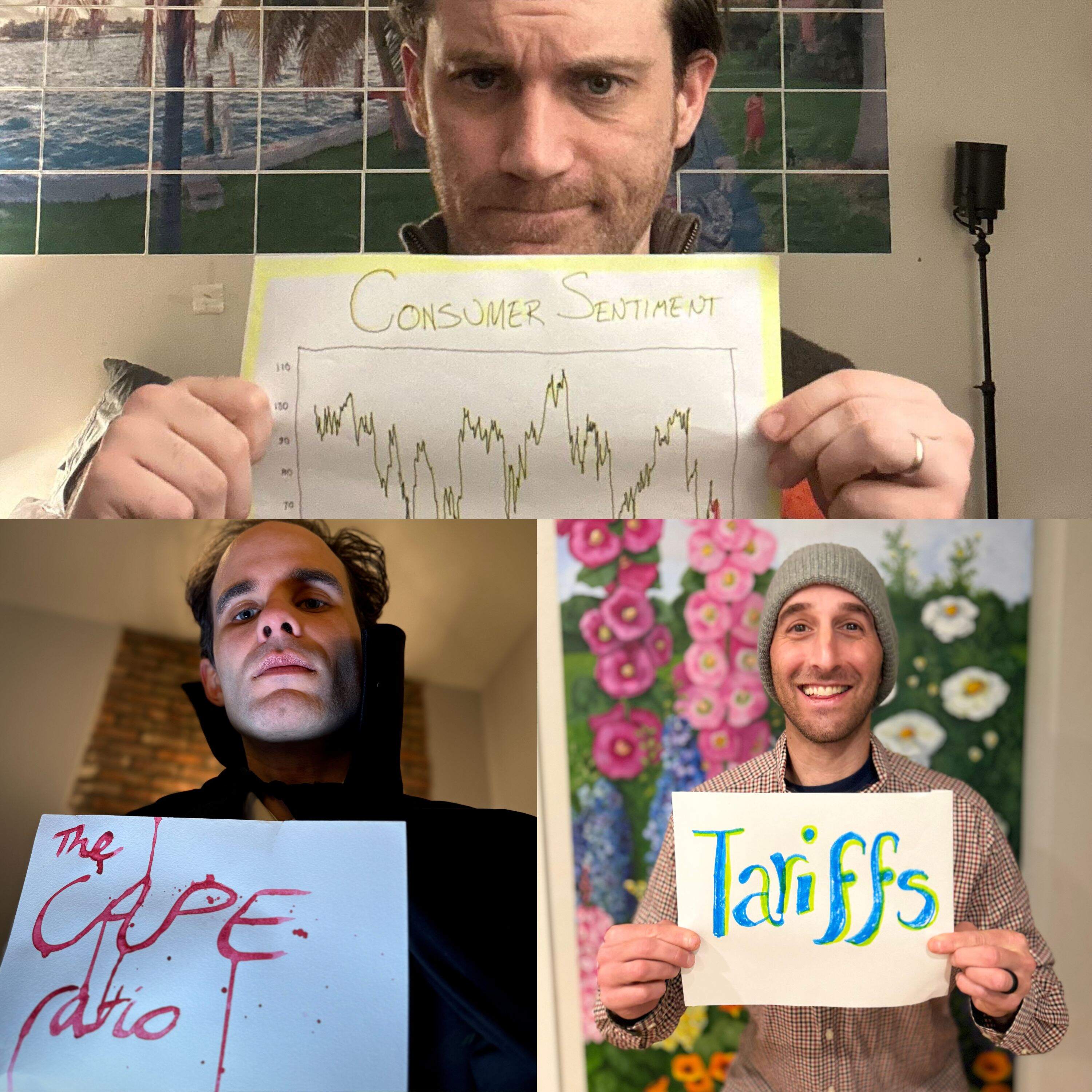
    Tariffs. Consumer sentiment. Cape Ratio. Pick The Indicator of The Year!

    Tariffs. Consumer sentiment. Cape Ratio. Pick The Indicator of The Year!

    Dec 19, 20259 min
    TariffsConsumer SentimentCAPE Ratio
    How to make $35 trillion ... disappear

    How to make $35 trillion ... disappear

    Dec 11, 202511 min
    Gita GopinathAI BoomStock Market Bubble
    Bitcoin miners are betting on AI over crypto

    Bitcoin miners are betting on AI over crypto

    Dec 10, 20259 min
    Bitcoin MiningAI Data CentersBitfarms