The Indicator from Planet Money
ExplorePodcast overview and latest content
EpisodesBrowse the full episode archive
TopicsDiscover episodes by category
PostsBrowse published articles & write-ups

Podcast

  • Explore
  • Episodes
  • Topics
  • Posts

Recent Episodes

  • Want a 2.5% mortgage? Buy it.
  • The anxiety rattling China’s youth
  • Why Paramount went looney tunes for Warner Bros.
  • Should the families of organ donors be compensated?
  • ICE is bad for business, heat is bad for coffee, and sci-fi is bad for markets

Links

  • Apple Podcasts
  • Overcast

About

The Indicator from Planet Money

The Indicator from Planet Money

A bite-sized show about big ideas. From the people who make Planet Money, The Indicator helps you make sense of what's happening in today's economy. It's a quick hit of insight into money, work, and business. Monday through Friday, in 10 minutes or less.

Powered byPodRewind
    The Indicator from Planet Money
    Episode•January 3, 2025•9 min

    President Jimmy Carter's economic legacy

    On this edition of Indicators of the Week, we discuss the economic legacy of former President, Jimmy Carter. Today on the show, we detail some of his top accomplishments from empowering the Federal Reserve's aggressive approach to inflation, deregulation of major industries and his push for cost saving energy measures that we still feel to this day. For sponsor-free episodes of The Indicator from Planet Money, subscribe to Planet Money+ via Apple Podcasts or at plus.npr.org (http://plus.npr.org/). Fact-checking by Sierra Juarez (https://www.npr.org/people/g-s1-26724/sierra-juarez#:~:text=for%20Planet%20Money-,Sierra%20Juarez%20is%20a%20researcher%20and%20fact%20checker%20at%20the,and%20fact%20checking%20in%20Mexico.). Music by Drop Electric (https://dropelectric.bandcamp.com/). Find us: TikTok (https://www.tiktok.com/@planetmoney), Instagram (https://www.instagram.com/planetmoney/), Facebook (https://www.facebook.com/planetmoney), Newsletter (https://www.npr.org/newsletter/money). To manage podcast ad preferences, review the links below: See pcm.adswizz.com (https://pcm.adswizz.com) for information about our collection and use of personal data for sponsorship and to manage your podcast sponsorship preferences. Learn more about sponsor message choices: podcastchoices.com/adchoices (https://podcastchoices.com/adchoices) NPR Privacy Policy (https://www.npr.org/about-npr/179878450/privacy-policy)

    Apple PodcastsOvercast

    Transcript

    0:01
    Npr.
    0:12
    So it is Friday, and that means it is time for Indicators of the Week. I'm Jeff Guo, and this week, Planet Money we are taking over. I'm here with fellow Planet Money host Erica Barris.
    0:27
    So happy to be here, along with
    0:29
    indicator, friend of the show and host of the environmental podcast Outside In, Nate Hedge.
    0:35
    Thanks for having me again.
    0:36
    Good to see ya.
    0:37
    Today we have three economic indicators focusing on the legacy of our late 39th president, Jimmy Carter.
    0:43
    One term, but got a lot of stuff done.
    0:45
    So much stuff done. We're going to talk about inflation control and the power of the Fed. We're going to talk about energy consumption and household heating costs, airline prices and craft beers. That is all coming up after the break. Okay, Indicators of the Week. So my indicator has to do with one very bold decision that President Carter made. A decision that would radically change the fate of the American economy and the discipline of macroeconomics itself.
    1:15
    Is this the craft beer that you were talking about earlier?
    1:18
    It's bigger than craft beer, believe it or not. Okay. And just to set the scene, right, this is the 1970s. This is, no, it's the era of Watergate. The Vietnam War was coming to an end.
    1:30
    Star wars just came out.
    1:31
    Disco was happening, you know, exciting times.
    1:34
    Right.
    1:35
    And it was also a very dramatic time for the economy because when Carter took office, the number one economic issue on people's minds, a more serious domestic
    1:45
    problem, that problem is inflation.
    1:48
    It was inflation. The, the 1970s was the era of double digit inflation. And okay, before Carter, the previous presidents, they'd kind of taken half measures to fight inflation. Nixon, for instance, he was a fan of government price controls, which any economist will tell you is not a long term solution to inflation.
    2:07
    Right. Fighting inflation is supposed to be the Fed's job.
    2:11
    Exactly. That is the general consensus today. But back then, the Fed was a lot more timid about fighting inflation. But with Carter, that all changed because in 1979, Carter nominates this new guy to be Fed chairman. The guy's name is Paul Volcker.
    2:29
    The infamous Paul Volcker.
    2:32
    Yeah. So when Carter nominates Volcker, Volcker's like just to warn you, if I'm Fed chairman, I'm going to be really tough on inflation. I'm going to want to raise interest rates a lot to cool down the economy. It'll be painful. There might be a recession, people might lose their jobs. And to his credit, Carter says, fine, you handle the economy, you handle inflation. Even if there are gonna be these painful consequences. And this, this was a very bold thing for a first term president to say.
    3:01
    Yeah, because that's not something you wanna say when you're running for reelection.
    3:04
    No, like he was running for reelection literally the next year. So it was maybe not the smartest move politically, but it ended up being the right move for the American economy. As the story goes, Volcker did end up taming inflation. And yes, it was painful, while Jimmy Carter did not end up getting reelected. But this was also kind of the birth of the Fed as we know it today, this independent and powerful custodian of the economy.
    3:32
    All right, so my indicator is 6 and is also related to Jimmy Carter's effort to control inflation. While he was president, he deregulated six big industries. We're still feeling all the effects of those today. Does anybody want to take any guesses on what those industries are?
    3:49
    Railroads.
    3:50
    Yeah. Good. Railroads is one.
    3:53
    Did he deregulate media?
    3:54
    Media was another one. Yep. So the six big industries we have airlines, trucking, rail or railroads, air cargo, cable tv and of course, beer.
    4:05
    Beer, There it is. Craft beer.
    4:07
    Basically all the pillars of modern life,
    4:09
    the most important things in the world. Yep. So when Carter took office in 1977, there were all these agencies that regulated things like interstate commerce and the airlines and telecommunications. And a big part of how they regulated was setting up these conditions for like trains and trucks and airlines, like who could even use them, where they could go, even how much the airlines were able to charge for flights, huh? Yes. So economists thought that all this regulatory activity was a contributor to rising prices because there wasn't that much competition. Industries wouldn't innovate, they'd keep prices high. And that actually ended up benefiting the regulated industries and ended up hurting consumers.
    4:49
    Huh.
    4:49
    He signed won the Airline Deregulation act. And that is part of why we have all these new airlines. They can just kind of pop up and you know, the routes can change and prices can vary so much. That wasn't really the case before he signed one to deregulate the trucking industry, another one to introduce competition in rail rates. There was a communications act that removed restrictions on things like long distance phone service and you know, did really important things for cable TV. That's why we have like 500 channels. Like MTV would not have existed otherwise. And the short lived Puppy Channel would not have existed otherwise.
    5:25
    There was a Puppy Channel?
    5:27
    Yes, there was a Puppy Channel back in the 90s.
    5:29
    Yeah.
    5:29
    Was there a Kitten channel?
    5:31
    There was not a kitten channel. I mean there could have been, I don't know, but I definitely remember the Puppy Channel.
    5:35
    Failure of the Free market.
    5:37
    It's not too late. Not too late. There was also an act to deregulate air cargo, which is kind of a key to the way, like, our supply chains work, work today. And the last of these deregulatory acts was beer. He, Jimmy Carter legalized home brewing, which led to, like, the craft beer revolution and the 8,000 pumpkin spice beers that we can all enjoy every year.
    6:00
    I think enjoy is a little bit of a stretch for those beers.
    6:04
    It depends on who you are. All this allowed there to be all these new companies and products and markets. It lowered rates, it offered consumers more choices and ended up being another contributor to declining inflation. So that was my indicator. It was six. Nate, what's yours?
    6:20
    Yeah. So my indicator of the week is $1.3 billion, and it's tied to cost savings and energy consumption. That's how much America saves every year on household heating and cooling bills. And do you wanna know why?
    6:34
    Jimmy Carter, maybe.
    6:37
    Yes.
    6:38
    Okay.
    6:39
    Big surprise. Jimmy Carter. So one of Carter's big pushes was energy conservation. Of course, he got ridiculed for wearing a cardigan and telling American to turn down their thermostat during an oil crisis.
    6:52
    How else is he gonna stay warm?
    6:54
    I know, exactly. I think. I think he would've been more well received now in this time than he was in the 70s wearing that cardigan. Anyways, he also created the Department of Energy during his administration. And this agency funded research and development into better windows, which is where that $1.3 billion comes in. Now. I'm sure all of us have lived in old, drafty houses with old windows.
    7:17
    Oh, yeah.
    7:18
    And before the oil crisis, people didn't worry too much about cranking up the heat. Energy was cheap. But the energy crisis of the 70s, it changed all of that.
    7:27
    Yeah, nobody's gonna crank up the heat.
    7:29
    Yeah, exactly. We're keeping it at 55. Well, maybe 65. So back to the DOE's research and development. It wanted to focus on more efficient windows to keep heat in. They worked with the Berkeley lab to develop a special metallic coating. It's thinner than a human hair. That reflects heat back into the home in the winter and away from the home in the summer. Nowadays, more than 80% of all residential homes have these windows. They cost about 10 to 15% more than your regular windows, but they can reduce your energy loss by up to 50%. And of course, that cuts your energy bills as well. Wow.
    8:03
    How do I know if I have one of those special windows?
    8:05
    Look at your heating bill.
    8:06
    Yeah, look at your heating bill. Are you spending a ton of money on your heating bill? Maybe take a look at your windows. And this is another thing, too. Even if you do have those windows, the metallic coating kind of starts to wear down every 10 to 15 years. So you gotta. You don't have to buy new windows, but you can, like, apply a new coating.
    8:22
    Wait, is that true?
    8:23
    Which is cheaper than Gidden? That's true. Yeah.
    8:25
    Okay.
    8:25
    One more thing to add to my to do list.
    8:28
    Yeah.
    8:31
    And it wasn't just windows. His legacy in terms of energy conservation is much broader, from more efficient appliances to solar panels. Do you all remember that he had solar panels on top of the White House?
    8:41
    Oh, yeah, of course. Legendary.
    8:43
    Ahead of his time.
    8:44
    Yeah. And without this legacy, one nonprofit energy company estimates that energy consumption in the US would be 60% higher and our carbon emissions would be 80% higher.
    8:54
    Wow.
    8:55
    Thanks.
    8:55
    Thanks, Jimmy Carter.
    8:56
    Thanks, Jimmy Carter.
    9:00
    This episode was produced by Corey Bridges with engineering from Gilly Moon. It was fact checked by Cooper Katz McKim. Kate Concannon is our editor, and the indicator is a production of npr.

    President Jimmy Carter's economic legacy

    0:00
    0:00

    Related Episodes

    Why there are roving rotisserie chicken mobs

    Why there are roving rotisserie chicken mobs

    Feb 23, 20269 min
    AI Job InterviewsBlind DiscriminationM2 Money Supply
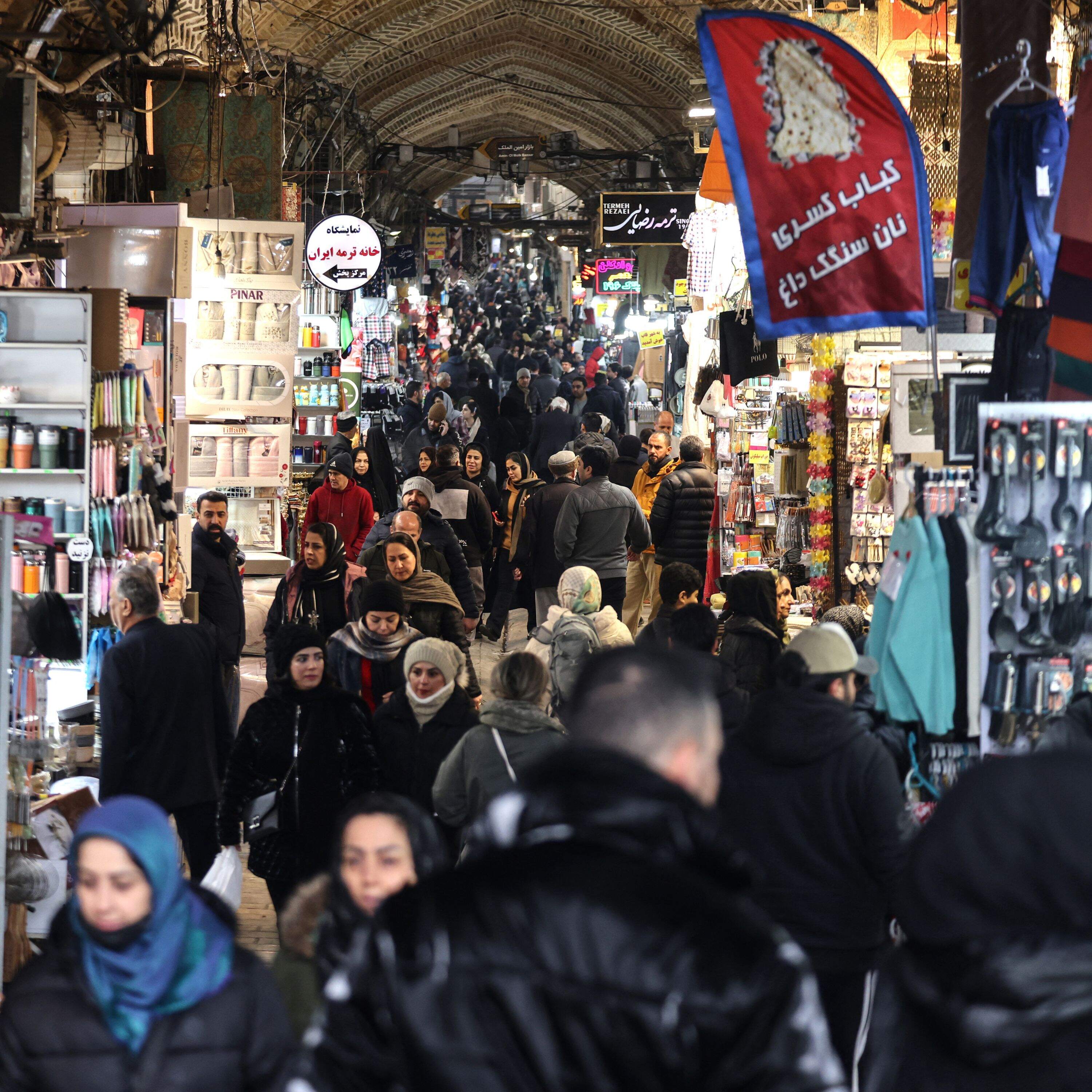
    How Iran's flagging economy inflamed its protests

    How Iran's flagging economy inflamed its protests

    Feb 17, 20269 min
    Iran ProtestsGrand BazaarIranian Rial
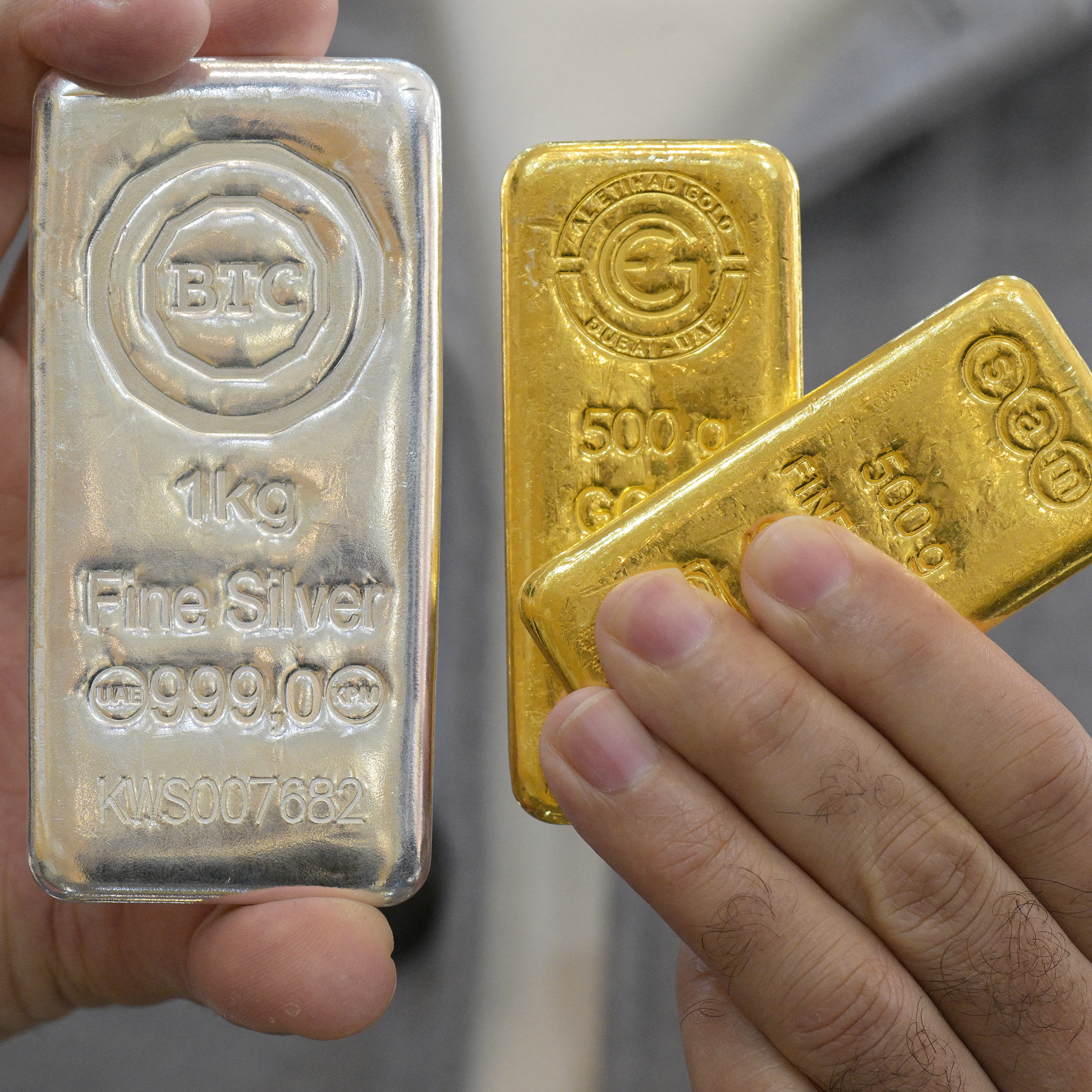
    What is going on with gold and silver?

    What is going on with gold and silver?

    Feb 11, 20269 min
    GoldSilverPrecious Metals
    Are we in an economic 'doom loop'?

    Are we in an economic 'doom loop'?

    Feb 9, 20269 min
    Eswar PrasadDoom LoopGlobalization