The Indicator from Planet Money
ExplorePodcast overview and latest content
EpisodesBrowse the full episode archive
TopicsDiscover episodes by category
PostsBrowse published articles & write-ups

Podcast

  • Explore
  • Episodes
  • Topics
  • Posts

Recent Episodes

  • Want a 2.5% mortgage? Buy it.
  • The anxiety rattling China’s youth
  • Why Paramount went looney tunes for Warner Bros.
  • Should the families of organ donors be compensated?
  • ICE is bad for business, heat is bad for coffee, and sci-fi is bad for markets

Links

  • Apple Podcasts
  • Overcast

About

The Indicator from Planet Money

The Indicator from Planet Money

A bite-sized show about big ideas. From the people who make Planet Money, The Indicator helps you make sense of what's happening in today's economy. It's a quick hit of insight into money, work, and business. Monday through Friday, in 10 minutes or less.

Powered byPodRewind
    The Indicator from Planet Money
    Episode•March 4, 2025•10 min

    Can the Federal Reserve stay independent?

    President Trump has been on an executive order-signing spree since returning to office, with 76 (https://www.federalregister.gov/presidential-documents/executive-orders/donald-trump/2025) so far. Today we look at two of them. Can the Fed really split up independent and non-independent roles? And what does DOGE's cost-cutting streak add up to? Related episodes: Slender Starbucks, Medicaid at risk, and the gold card visa (Apple (https://podcasts.apple.com/us/podcast/the-indicator-from-planet-money/id1320118593?i=1000696664889) / Spotify (https://open.spotify.com/episode/7HA9BoySFuX2mKQUvmJy0S?si=e22a67c15b6a480e)) What happens with billions in research funding goes away (Apple (https://podcasts.apple.com/us/podcast/the-indicator-from-planet-money/id1320118593?i=1000694165430) / Spotify (https://open.spotify.com/episode/2yzhoQDRRcnm4eEkNEJgge?si=67b6bf6307134892)) Should presidents have more say over interest rates? (Apple (https://podcasts.apple.com/us/podcast/the-indicator-from-planet-money/id1320118593?i=1000665361354) / Spotify (https://open.spotify.com/episode/3YECrDwlRWyKR0Qnfb6Sae?si=ZfWhURjxS0KkkI2UZJU3bA)) For sponsor-free episodes of The Indicator from Planet Money, subscribe to Planet Money+ via Apple Podcasts or at plus.npr.org (http://plus.npr.org/). Fact-checking by Sierra Juarez (https://www.npr.org/people/g-s1-26724/sierra-juarez). Music by Drop Electric (https://dropelectric.bandcamp.com/). Find us: TikTok (https://www.tiktok.com/@planetmoney), Instagram (https://www.instagram.com/planetmoney/), Facebook (https://www.facebook.com/planetmoney), Newsletter (https://www.npr.org/newsletter/money). To manage podcast ad preferences, review the links below: See pcm.adswizz.com (https://pcm.adswizz.com) for information about our collection and use of personal data for sponsorship and to manage your podcast sponsorship preferences. Learn more about sponsor message choices: podcastchoices.com/adchoices (https://podcastchoices.com/adchoices) NPR Privacy Policy (https://www.npr.org/about-npr/179878450/privacy-policy)

    Apple PodcastsOvercast

    Transcript

    0:01
    Npr.
    0:11
    This is the indicator from Planet Money. I'm Waylon Wong.
    0:14
    And I'm Darian Woods.
    0:15
    Okay, here is an indicator for you, Darian. 76. That's how many executive orders, as of this recording, President Trump has signed so far. That is more than any president this early in their term.
    0:28
    He has been spilling the presidential ink. And as we know, many of these orders will be tied up in court for the foreseeable future. But we want to focus on two of these executive orders as they relate to the economy.
    0:43
    Today on the show, what an executive order means for the future independence of
    0:47
    the Federal Reserve and why the Doge cost cutting spree is not likely to make much of a dent in federal spending.
    0:55
    That's coming up after the break. The Federal Reserve has two main jobs. The first one is what we hear about most of the time, making sure the amount of money flowing through the economy is just right, making sure there's not too much inflation or unemployment. That's what wonks call monetary policy.
    1:15
    The other main job is keeping banks running smoothly. And it does this by regulating and supervising the financial system. Both of these jobs are done at arm's length from Congress or the president. You know, the Fed is independent.
    1:30
    Trump signed an executive order in mid February to make sure agencies follow the president's priorities. It put tighter control on how these agencies spend and regulate. And it applied to agencies like the securities and Exchange Commission, the Federal Trade Commission and the Federal Reserve.
    1:46
    Now, there's one big asterisk here. The executive order says it only applies to the Federal Reserve's role in safeguarding the financial system. It doesn't apply to the Fed's raising and lowering of interest rates to fight inflation and protect jobs. You know, monetary policy. Catherine Judge is a law professor at Columbia University.
    2:06
    There is an effort to signal, look, we don't want to mess with monetary policy. So it seeks to provide a little bit of calm and status quo maintenance.
    2:16
    Catherine says it's widely accepted that less independent central banks end up with higher inflation rates. Research backs this up.
    2:24
    Trump doesn't want to stoke fears that we're going to have persistent inflation by changing the leadership structure of the Fed or his control over the Fed in ways that would give him the ability to dictate interest rates.
    2:40
    The evidence is less clear about the effects of having the Fed's bank supervision and regulation role under the grip of politicians. And so it makes sense that President Trump specifically carved out the Fed's monetary policy as staying independent. But the big question is how this division would work in Practice.
    2:59
    It also raises questions over how the Fed might intervene when something goes wrong. For example, when Silicon Valley bank ran into financial trouble in 2023, the Fed stepped in to lend it money. Would those decisions now be subject to White House review?
    3:15
    Catherine says the problem with this approach is if the White House begins to meddle in some functions of the Fed, it would undermine other decisions made by the individuals at the Fed.
    3:24
    So the core challenge is you have these individual who are playing multiple rules, and how credible is it that they are going to maintain independence on one front and not others?
    3:36
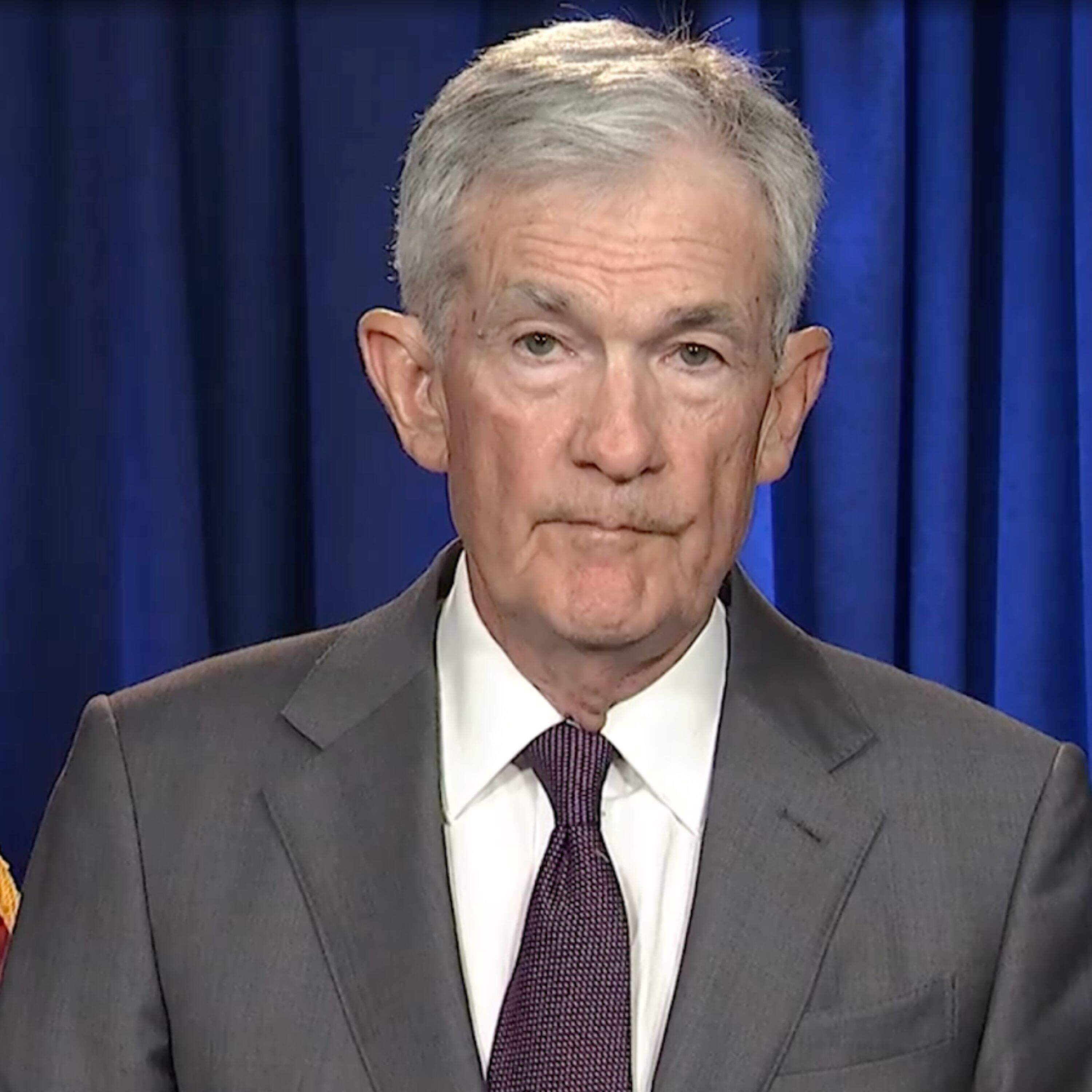
    This tension has been apparent since the election of Donald Trump. The president said in January the Fed was doing a terrible job on banking regulations. The Fed's top bank enforcer, Michael Barr, has also stepped down. And at the same time, Fed Chair Jerome Powell has been fielding more questions lately over whether his decisions on interest rates will be influenced by Trump or, for that matter, Elon Musk. Here's what Powell told a House committee last month about potential executive branch interference.
    4:04
    What we're going to do at the Fed is keep our heads down and keep working. Wait to see what new policies emerge, and try to make a thoughtful, sensible set of policies on our part once we understand the implications of those.
    4:18
    Classic Powell keeping his head down, doing the work.
    4:22
    Please don't bother me.
    4:23
    I would not expect anything less from him. You know, we reached out to the White House to ask how this division would be managed. According to a senior administration official, the Office of Management and Budget will oversee all the Fed's regulations not related to monetary policy. We also asked if it could erode the credibility of the Fed's decisions to raise or lower interest rates. The same statement said no. And to, quote, include that accusation in your story would not be accurately reporting the executive order.
    4:51
    Jerome Powell's term as chair expires next year. So if Trump wants to go in a different direction on monetary policy, that would be his earliest opportunity.
    5:00
    The next executive order. We've been talking about this one a lot on the indicator recently is Doge Trump signed this executive order on his first day in office. The Department of Government Efficiency, which, as we need to keep reminding people, is not actually a department. The order says Doge will, quote, modernize federal technology and software to maximize government efficiency and productivity. And as we've seen over the last couple of weeks, that has translated into a lot of federal workers losing their jobs. This is the chainsaw for bureaucracy.
    5:34
    That's Elon Musk heard here brandishing a chainsaw at cpac, the annual conference that draws conservative activists and officials. Musk, of course, is Doge's de facto leader. He's appeared in front of Trump's cabinet to explain his cost cutting efforts, and estimates vary, but more than 30,000 federal employees have been laid off so far.
    5:54
    Doge has also mistakenly fired, then rehired critical employees at the Food and Drug Administration and the National Nuclear Security Administration.
    6:04
    Jessica Riedel is with the Center Right Manhattan Institute and has been writing about budgets and spending for over two decades.
    6:11
    I'm a fiscal conservative. I have written 600 reports on how to cut spending over the past quarter century, but it has to be done well and competently, jessica says.
    6:22
    That has not been the case with Doge. Musk has made a goal of trying to trim at least $1 trillion from the budget that regularly runs into the red right now. Doge's official website claims they've saved just over $100 billion, but NPR reported it could only verify a little over $2 billion in savings.
    6:42
    So it's early days, yes, but there is still $998 billion to go. Jessica says the bulk of the government's 6.7 trillion in annual spending isn being scrutinized by Doge.
    6:55
    75% of all federal spending goes to six programs, Social Security, Medicare, Medicaid, defense, veterans and interest.
    7:06
    And by interest she means the cost of borrowing, which has also been rising for the government, came close to a trillion dollars last year.
    7:14
    Most of that has been taken off the table by Trump and Republicans, and they're not going to be able to to really do much on the deficit until they do hit those programs.
    7:24
    While Social Security and Medicare are politically almost untouchable, congressional Republicans do appear to be going after at least one of these programs, and that is Medicaid, the health insurance program for low income Americans and people with disabilities. Their latest proposal to extend Trump's 2017 tax cuts would likely include steep cuts to Medicaid, potentially leaving millions without health care.
    7:49
    And even if these spending cuts do pass, Jessica estimates the Republicans bill, which includes tax cuts, will increase the deficit by an average of about $350 billion a year.
    8:01
    I compared this to congressional Republicans as the irresponsible husband going to buy a $250,000 Ferrari and put it on the family credit card. And Doge is just the $2 off gas card he uses on the way there.
    8:20
    The question is, can Doge actually do all this legally? Historically, Congress has had the power of the purse, but the Trump administration is challenging this either way. The Republicans controlling Congress right now seem to be on board with the cutbacks. Still, Jessica says it will be hard to make those cuts. On Friday, Musk appeared on Joe Rogan's podcast to defend Doge's work against mounting
    8:45
    critic which of these sort of waste slash fraud things are wrong? Which line? Explain that line to the public. They won't be able to.
    8:53
    Both NPR and the New York Times have pointed to specific mistakes in Doge's accounting. For example, Doge claimed savings on a Coast Guard contract that ended in 2005 and a national Institutes of Health contract that's still active. For his part, Musk told Rogan that if Doge makes a mistake they would quickly fix it. But he said they need to act fast to quote, stop wasting billions of dollars of payer money. This episode was produced by Julia Richie with engineering by Gilly Moon. It was fact checked by Sierra Juarez. Kicking Cannon is our show's editor and the indicator is a production of NPR.

    Can the Federal Reserve stay independent?

    0:00
    0:00

    Related Episodes

    Why there are roving rotisserie chicken mobs

    Why there are roving rotisserie chicken mobs

    Feb 23, 20269 min
    AI Job InterviewsBlind DiscriminationM2 Money Supply
    What is going on with gold and silver?

    What is going on with gold and silver?

    Feb 11, 20269 min
    GoldSilverPrecious Metals
    America's next top Fed Chair

    America's next top Fed Chair

    Feb 2, 20269 min
    Kevin WarshFederal ReserveJerome Powell
    One Fed battle after another

    One Fed battle after another

    Jan 13, 20269 min
    Jerome PowellFederal ReserveTrump Administration